
Liability, Collision, and Comprehensive: The Core Coverage Types Explained
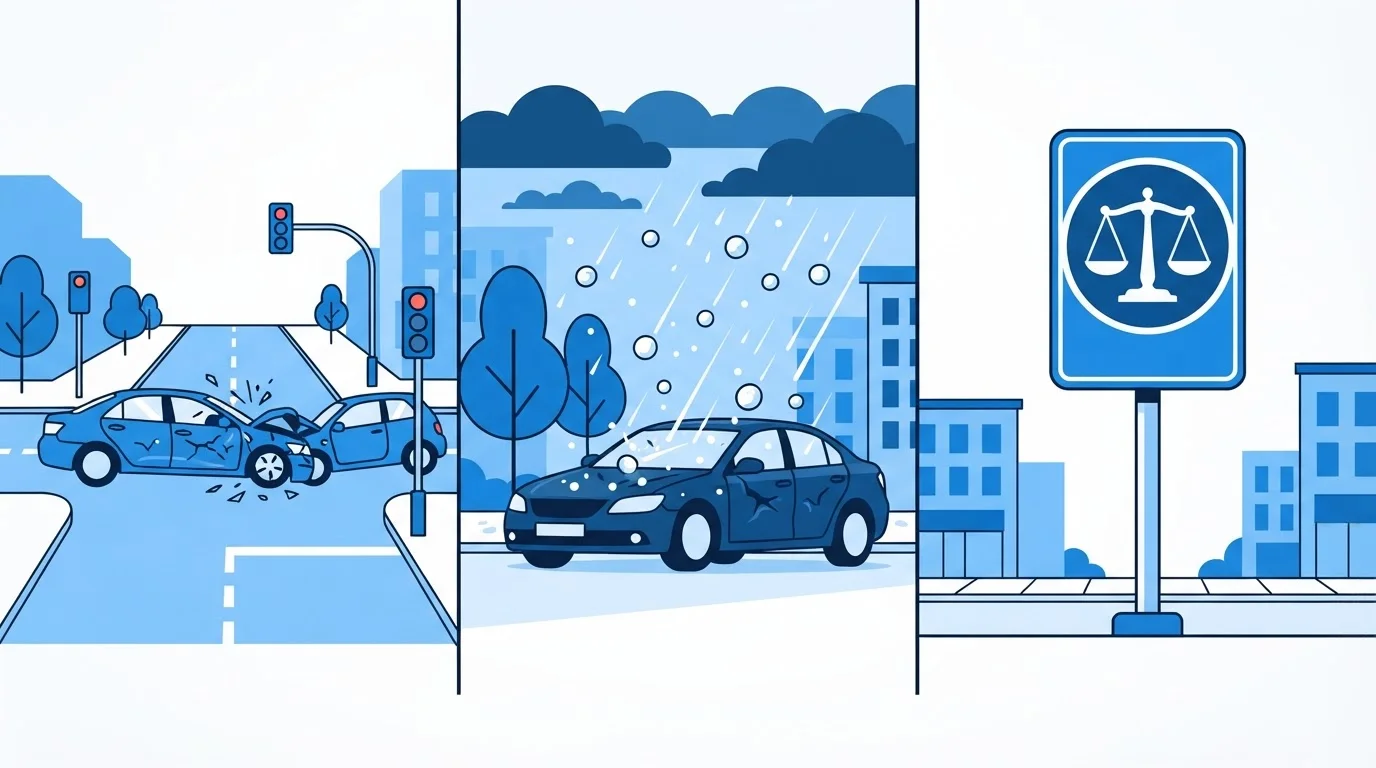
Photo credit: TurboBlogs.net | Explore Blogs At Turbo Speed
In this article
Understand the three foundational auto insurance coverage types, what each one protects, and when each applies after an accident or loss.
Key Takeaways
- Liability coverage is required in nearly every U.S. state and protects other people, not your own vehicle.
- Collision coverage applies when your car is damaged in an accident, regardless of who caused it.
- Comprehensive coverage addresses losses from events outside of driving collisions, such as theft or hail.
- Lenders typically require both collision and comprehensive if you finance or lease your vehicle.
- Each coverage type carries its own limit and deductible, which directly affects your out-of-pocket costs.
What Liability Coverage Does - and Doesn't - Cover
Liability insurance is the legal floor of auto coverage in the United States. It pays for bodily injury and property damage that you cause to other people in an accident. If you run a red light and strike another vehicle, liability coverage pays for the other driver's medical bills and vehicle repairs up to your policy limits - it does not pay for your own injuries or damage to your own car.
Policies express liability limits in a split format, such as 50/100/50, which means $50,000 per injured person, $100,000 per accident for all bodily injuries, and $50,000 for property damage. State minimums are often far lower than what a serious accident can cost, which is why many drivers opt for higher limits. For a fuller picture of how state minimums compare to broader protection, see our guide to state minimum vs. full coverage.
Liability Limits Don't Protect You From Lawsuits
If the damage you cause exceeds your liability limits, the injured party may sue you personally for the remaining amount. This is one reason many financial advisors recommend carrying limits higher than your state's legal minimum - particularly if you have significant assets. An umbrella policy can provide additional protection beyond standard auto liability limits.
How Collision Coverage Works After an Accident
Collision coverage pays to repair or replace your vehicle when it's damaged in an accident with another vehicle or object - a guardrail, a telephone pole, or another car - regardless of who was at fault. Even if the other driver caused the crash, you can file a collision claim on your own policy and let your insurer handle fault determinations on the back end.
A deductible applies before your insurer pays. If you choose a $500 deductible and repairs cost $3,200, you pay $500 and your insurer covers $2,700. Choosing a higher deductible lowers your premium but increases what you owe after a claim. Collision coverage is optional if you own your car free and clear, but most auto lenders require it for financed vehicles. Learn more about overall car ownership considerations when evaluating your policy needs.
Match Your Deductible to Your Emergency Fund
When setting your collision or comprehensive deductible, choose an amount you could realistically pay out of pocket without financial strain. A $1,000 deductible lowers your premium but means you'll owe $1,000 the next time you file a claim - make sure that's a figure you can handle before committing to it.
Comprehensive Coverage: Protection Beyond the Road
Comprehensive coverage addresses losses that have nothing to do with a driving collision. It applies when your vehicle is stolen, damaged by a falling tree, flooded, struck by a deer, vandalized, or caught in a hailstorm. Like collision, it comes with a separate deductible and is typically required by lenders and lessors on financed or leased vehicles.
One important limitation: comprehensive does not cover mechanical breakdown, engine wear, or tire damage from road hazards (though some insurers offer separate endorsements for those). It also doesn't cover personal items stolen from inside the vehicle - that falls under a homeowners or renters policy. When deciding whether to carry comprehensive on an older, fully paid-off vehicle, it's worth comparing your annual premium against the car's current market value.
~13%
U.S. drivers estimated to be uninsured
The Insurance Research Council has estimated that roughly one in eight drivers on American roads carries no auto insurance, underscoring the financial risk liability coverage is designed to address.
$5,000+
Average cost of hail damage repair
Industry repair data suggests significant hail events can easily result in thousands of dollars in vehicle damage, illustrating why comprehensive coverage has measurable value in storm-prone regions.
~$1 million
Cost threshold a serious accident can reach
Multi-vehicle accidents with severe injuries and extended medical care can generate claims well into six or seven figures, which is why insurance professionals often recommend limits well above state minimums.
Putting the Three Coverages Together
Think of these three coverage types as occupying distinct lanes of protection. Liability protects other people when you are at fault. Collision protects your vehicle when it hits something. Comprehensive protects your vehicle when the world acts on it. Together, they form the foundation of what many call a full coverage policy - though that phrase has no formal legal definition and varies by insurer.
Most policies allow you to adjust limits and deductibles independently for each coverage type, which gives you meaningful control over both your monthly premium and your financial exposure after a loss. Reviewing those choices periodically - especially after paying off a loan or after your vehicle depreciates significantly - is a sound practice for any owner.
This article is for general informational and educational purposes only and does not constitute insurance, legal, or financial advice. Coverage terms, exclusions, and availability vary by insurer and state. Consult a licensed insurance professional and review your actual policy documents for guidance specific to your situation.
Frequently Asked Questions

Author
Autos & Insurance Editorial Team
Autos & Insurance Editorial Team is the collective byline for our editorial team and contributor network. Articles published under this byline or an editorial pen name are researched, written, and reviewed according to our editorial standards for clarity, consistency, and independence before publication.
View all articles →