
Usage-Based and Pay-Per-Mile Insurance: How They Work
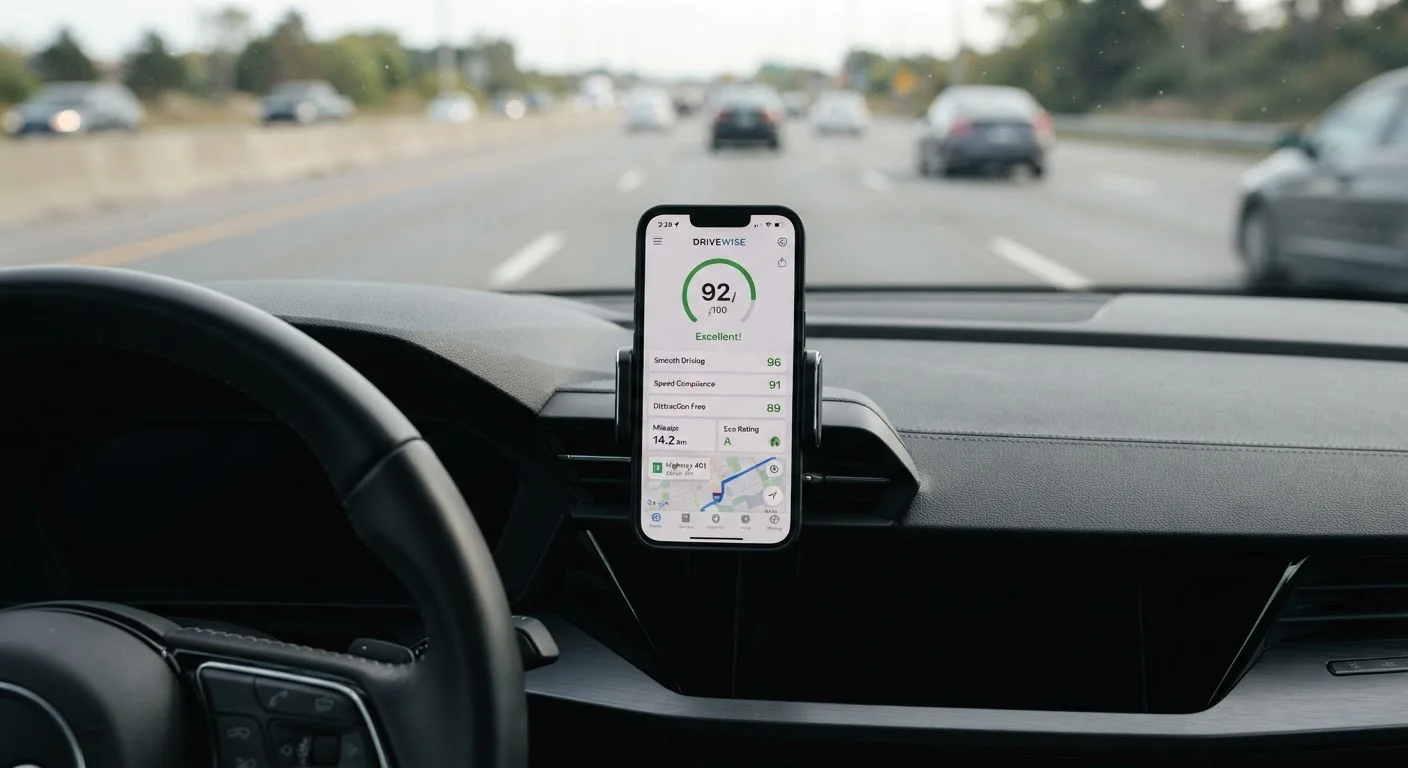
Photo credit: TurboBlogs.net | Explore Blogs At Turbo Speed
In this article
Telematics programs track driving behavior or mileage to set your rate. Learn how these models work, their trade-offs, and who tends to benefit.
Key Takeaways
- Usage-based insurance uses telematics to price your policy around how - and how much - you drive.
- Pay-per-mile programs charge a base rate plus a per-mile fee, rewarding low-mileage drivers most.
- Drivers who brake hard, speed, or drive late at night may see higher rates under behavioral programs.
- Privacy trade-offs are real: enrolling shares detailed driving data with your insurer.
- These programs suit safe, infrequent drivers but may not benefit everyone.
Potential for meaningful premium savings
Drivers with safe habits or low annual mileage can earn discounts that a standard policy wouldn't offer. Some insurers advertise savings for qualifying drivers, though actual results vary.
Fairer pricing tied to actual behavior
Rather than relying solely on demographics, telematics lets your real driving record speak for itself - potentially benefiting drivers whose age or zip code would otherwise push their rate up.
Pay-per-mile rewards low-mileage drivers directly
If your car sits idle much of the week, a per-mile structure means you only pay for the risk exposure you actually generate, unlike flat-rate policies.
Can encourage safer driving habits
Real-time feedback from a telematics app gives drivers visibility into behaviors - like hard braking - they may not have noticed, creating an incentive to improve.
Often includes a monitoring-period discount
Many programs offer a small upfront discount just for enrolling, before any driving behavior is evaluated.
Privacy trade-off is significant
Enrollment means sharing detailed location and behavior data with your insurer. How that data is stored, used, or shared depends on each company's policy, which varies considerably.
Contextual factors can hurt your score unfairly
Night-shift workers, caregivers making emergency trips, or drivers in hilly urban areas may receive lower scores through no fault of their habits - sensors measure conditions, not circumstances.
Rates may increase at renewal based on data
If your driving data reveals patterns the insurer considers risky, your premium at renewal could rise rather than fall - a risk worth weighing before enrolling.
High-mileage drivers rarely benefit from pay-per-mile
For commuters logging 15,000 or more miles a year, per-mile pricing often exceeds what a standard flat-rate policy would cost.
Program mechanics vary widely across insurers
How scores are calculated, what behaviors are weighted, and when discounts apply differ by insurer and state - making direct comparison difficult without reading the fine print.
Two Models, One Idea
Traditional auto insurance prices your policy around who you are - your age, location, credit history, and driving record. Usage-based insurance (UBI) shifts that calculation toward how you actually drive. The underlying concept is simple: if your insurer can measure real driving behavior rather than relying on demographic proxies, pricing can more closely reflect actual risk.
Two distinct models have emerged. Behavior-based telematics programs monitor factors like speed, hard braking, rapid acceleration, phone use, and time of day. The insurer assigns a driving score and adjusts your premium accordingly. Pay-per-mile insurance is simpler: you pay a fixed base rate plus a small fee for each mile driven. The focus is quantity, not style.
Both rely on data collected through a plug-in device (typically inserted into your car's OBD-II diagnostic port), a dedicated smartphone app, or - in newer vehicles - a built-in connected-car system. For a broader look at the factors that shape what you pay, see factors that shape your auto insurance premium.
Pros and Cons of Usage-Based Insurance
These programs offer a genuinely different value proposition from standard policies, but they come with meaningful trade-offs. The balance depends heavily on your driving profile.
Potential for meaningful premium savings
Drivers with safe habits or low annual mileage can earn discounts that a standard policy wouldn't offer. Some insurers advertise savings for qualifying drivers, though actual results vary.
Fairer pricing tied to actual behavior
Rather than relying solely on demographics, telematics lets your real driving record speak for itself - potentially benefiting drivers whose age or zip code would otherwise push their rate up.
Pay-per-mile rewards low-mileage drivers directly
If your car sits idle much of the week, a per-mile structure means you only pay for the risk exposure you actually generate, unlike flat-rate policies.
Can encourage safer driving habits
Real-time feedback from a telematics app gives drivers visibility into behaviors - like hard braking - they may not have noticed, creating an incentive to improve.
Often includes a monitoring-period discount
Many programs offer a small upfront discount just for enrolling, before any driving behavior is evaluated.
Privacy trade-off is significant
Enrollment means sharing detailed location and behavior data with your insurer. How that data is stored, used, or shared depends on each company's policy, which varies considerably.
Contextual factors can hurt your score unfairly
Night-shift workers, caregivers making emergency trips, or drivers in hilly urban areas may receive lower scores through no fault of their habits - sensors measure conditions, not circumstances.
Rates may increase at renewal based on data
If your driving data reveals patterns the insurer considers risky, your premium at renewal could rise rather than fall - a risk worth weighing before enrolling.
High-mileage drivers rarely benefit from pay-per-mile
For commuters logging 15,000 or more miles a year, per-mile pricing often exceeds what a standard flat-rate policy would cost.
Program mechanics vary widely across insurers
How scores are calculated, what behaviors are weighted, and when discounts apply differ by insurer and state - making direct comparison difficult without reading the fine print.
It is worth noting that a telematics program is not a guaranteed discount. Some insurers offer savings only at renewal after reviewing a monitoring period; others apply adjustments continuously. Always ask exactly when and how your rate is affected before enrolling.
Privacy: The Trade-Off Worth Understanding
Your Data in a Claim Dispute
Some drivers don't realize that telematics data collected by their insurer could potentially be referenced during a claim investigation. If your recorded speed or braking pattern at a given moment contradicts your account of an incident, that data exists in your insurer's system. This doesn't mean you should avoid these programs, but it's a dimension of enrollment worth understanding upfront. Review your insurer's terms carefully and consult a licensed agent if you have questions.
Enrollment in a telematics program means handing your insurer a detailed log of your driving activity. Depending on the program, that data may include your location, the routes you travel, the times you drive, and how you behave behind the wheel. Insurers' data retention and sharing policies vary - some share aggregated data with third parties; others do not.
Before enrolling, review the insurer's privacy disclosures carefully. Ask how long data is stored, whether it can be used in a claim dispute, and whether you can withdraw consent. This is a legitimate consideration, not a reason to avoid these programs outright - but it warrants attention.
Who Tends to Benefit - and Who Doesn't
Pay-per-mile insurance is most straightforward in its appeal: if you drive fewer miles than average - say, because you work from home, use public transit regularly, or are a retiree - your premium should reflect that lower exposure. Drivers who put 5,000 miles or fewer on their car annually are frequently cited as the strongest candidates.
Behavior-based UBI rewards consistency. A driver who rarely exceeds posted speed limits, brakes smoothly, avoids late-night travel, and puts the phone away tends to score well. Young drivers in particular sometimes use telematics programs as a structured way to demonstrate safe habits that their age-based rate doesn't yet reflect.
Conversely, drivers with long highway commutes, irregular hours (such as those who work night shifts), or habits like firm braking in stop-and-go traffic may find their scores - and thus their rates - move in an unfavorable direction. The program measures what the sensors see, not intent or context.
Understanding these dynamics is part of being an informed insurance consumer. For a plain-English foundation on how policies work, Auto Insurance Decoded covers the essentials. And if your driving situation changes - a new commute, a move, a different schedule - it may be time to revisit your coverage choices entirely, as outlined in auto insurance policy checkpoints.
~20%
Typical UBI discount range cited by insurers
Many telematics programs advertise potential savings in the 10-20% range for qualifying drivers, though actual discounts depend on individual driving data and insurer methodology.
~5,000 mi
Annual mileage where pay-per-mile often becomes competitive
Industry analysts and consumer advocates generally suggest pay-per-mile pricing becomes advantageous for drivers logging roughly 5,000 miles or fewer per year compared to standard policies.

Author
Autos & Insurance Editorial Team
Autos & Insurance Editorial Team is the collective byline for our editorial team and contributor network. Articles published under this byline or an editorial pen name are researched, written, and reviewed according to our editorial standards for clarity, consistency, and independence before publication.
View all articles →