
Reading Your Car's Dashboard Warning Lights Without Panic
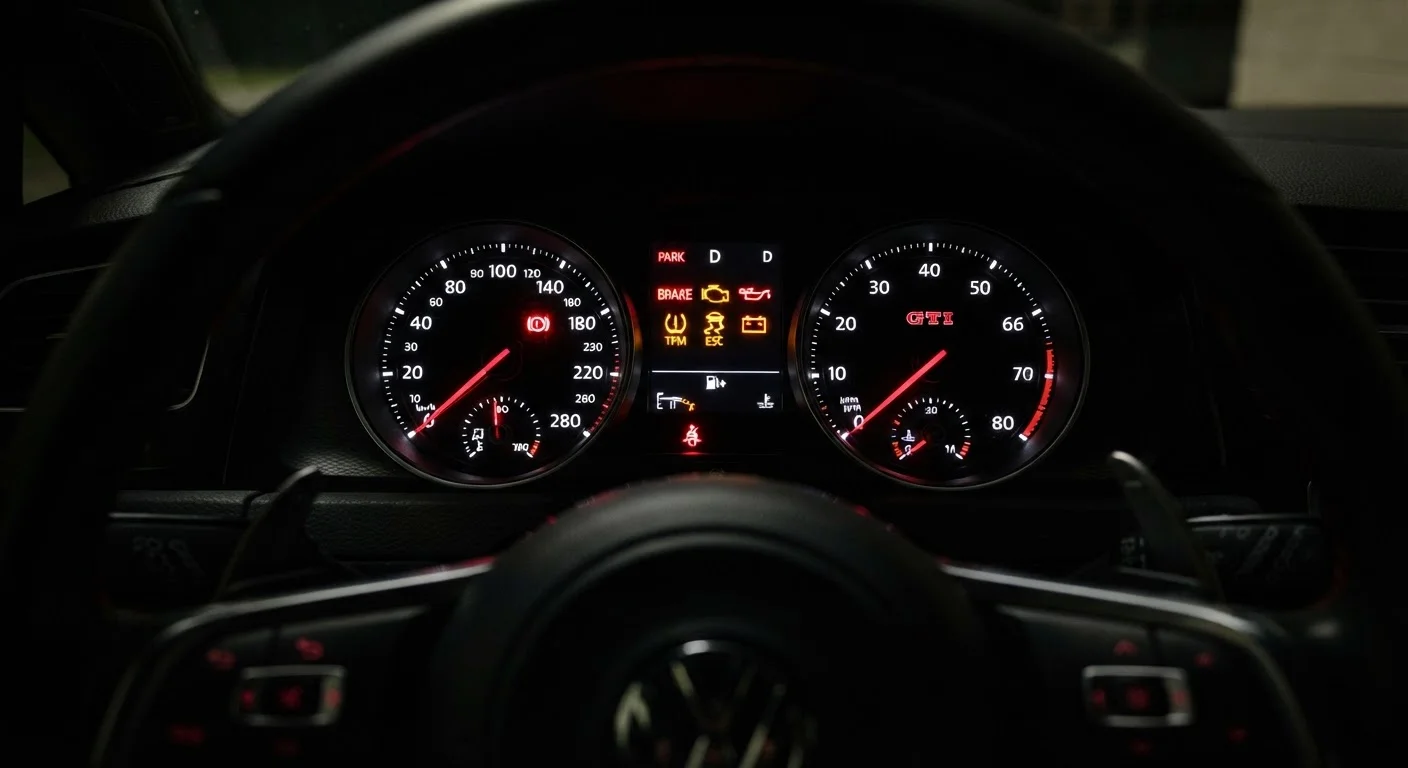
Photo credit: TurboBlogs.net | Explore Blogs At Turbo Speed
In this article
A plain-language reference to what common dashboard warning lights mean and which ones require immediate attention from a mechanic.
The Color Code: Understanding Urgency at a Glance
Dashboard warning lights follow a near-universal color system designed to communicate urgency before you even read the symbol. Understanding this hierarchy lets you make a calm, informed decision in the moment.
| Color of highest urgency | Red (Universal automotive industry standard) |
| Color of caution / service soon | Amber or Yellow (Universal automotive industry standard) |
| Vehicles required to have OBD-II | All U.S. passenger cars model year 1996 and later (U.S. Environmental Protection Agency mandate) |
| Most commonly triggered light | Check Engine (MIL) (Reported consistently by auto service industry data) |
| Lights that mean pull over now | Oil pressure, engine temperature, battery, brake system (General automotive safety consensus) |
- Red lights signal an immediate threat to safety or the engine. Pull over safely as soon as conditions allow and do not continue driving until the cause is identified.
- Amber or yellow lights indicate a system that needs attention soon - typically within days or at your next service appointment - but rarely require you to stop immediately.
- Green or blue lights are informational, confirming that a feature (high beams, cruise control) is active. No action required.
This color logic is not a manufacturer invention; it mirrors the same traffic-light convention used globally, which is why it works as an intuitive first filter even before you identify the specific symbol.
The Lights That Demand Immediate Action
Certain warning lights indicate conditions that can cause severe mechanical damage or create a safety hazard within minutes. If any of the following illuminate - especially in red - treat it as a reason to find a safe place to stop and contact a qualified mechanic.
- Oil Pressure Warning
- Shaped like an old-fashioned oil can, this light means the engine is not receiving adequate oil pressure. Continuing to drive can destroy internal engine components in a matter of minutes. Turn off the engine as soon as it is safe to do so.
- Engine Temperature Warning
- A thermometer symbol (sometimes accompanied by wavy lines) signals that coolant temperature has reached a dangerous level. Overheating can warp cylinder heads and cause catastrophic engine failure. Stop the vehicle and let it cool before opening the hood.
- Battery / Charging System
- A battery icon indicates the charging system is failing. The vehicle is running on battery reserve alone; electrical systems will begin to fail, and the engine may stall. Minimize electrical load and drive directly to a shop or safe location.
- Brake System Warning
- If this light appears while the parking brake is fully released, it may signal low brake fluid or a hydraulic fault. Have the brakes inspected before driving further.
Your Owner's Manual Is the Definitive Source
Warning light symbols and their exact meanings can vary by manufacturer and model year. The descriptions in this article reflect common industry conventions, but your vehicle's owner's manual will always be the authoritative reference for your specific car. Keep a digital or physical copy accessible for quick lookup.
This article provides general educational information. For any warning light that may affect vehicle safety, consult a licensed mechanic before making decisions about continued driving.
Common Amber Lights and What They Actually Mean
Amber lights account for the majority of dashboard alerts most drivers encounter. They are not emergencies, but they should not be ignored indefinitely. Here are the most frequently seen ones:
1 in 4
Vehicles on U.S. roads with check engine light on
Estimates from automotive data firms suggest roughly one in four cars driven daily has an active check engine light, many going unaddressed for weeks.
~$300-$500
Typical cost of ignoring a coolant warning
Continuing to drive with an overheating engine can escalate a minor coolant issue into a blown head gasket repair costing several thousand dollars.
- Check Engine (MIL): This light covers a wide range of faults, from a loose gas cap to a misfiring cylinder. A solid check engine light means schedule a diagnostic scan soon; a flashing check engine light indicates an active misfire that can damage the catalytic converter - reduce speed and seek service promptly.
- Tire Pressure Monitoring System (TPMS): One or more tires are significantly under- or over-inflated. Check pressures manually with a gauge, since TPMS does not always indicate which specific tire is affected.
- Traction Control / Stability Control: A blinking light during slippery conditions is normal - the system is working. A steady light may mean the system has been manually deactivated or has a fault.
- Service Engine Soon / Maintenance Required: Typically a mileage-based reminder that an oil change or scheduled service is due. It does not indicate a mechanical fault, but should be reset after the service is performed.
For a broader look at staying ahead of these issues, see our car maintenance schedule guide. First-time owners may also benefit from the full overview in what every first-time car owner should know.
OBD-II Port
A standardized diagnostic connector found in most vehicles built after 1996. Mechanics and technicians plug a scan tool into this port to retrieve error codes stored by the vehicle's computer when a warning light triggers.
Malfunction Indicator Lamp (MIL)
The technical name for the check engine light. It signals that the vehicle's onboard diagnostic system has detected a fault in an emissions-related or engine management component.
Limp Mode
A protective state some vehicles enter automatically when a serious fault is detected. The engine management system restricts power and speed to prevent further damage while allowing the driver to reach a repair facility.
Coolant Temperature
A measure of how hot the engine's liquid cooling system is running. Sustained high coolant temperatures can cause severe engine damage, making this one of the most critical warning lights to act on immediately.

Author
Autos & Insurance Editorial Team
Autos & Insurance Editorial Team is the collective byline for our editorial team and contributor network. Articles published under this byline or an editorial pen name are researched, written, and reviewed according to our editorial standards for clarity, consistency, and independence before publication.
View all articles →