
Emergency Fund vs. Savings Account: Understanding the Difference
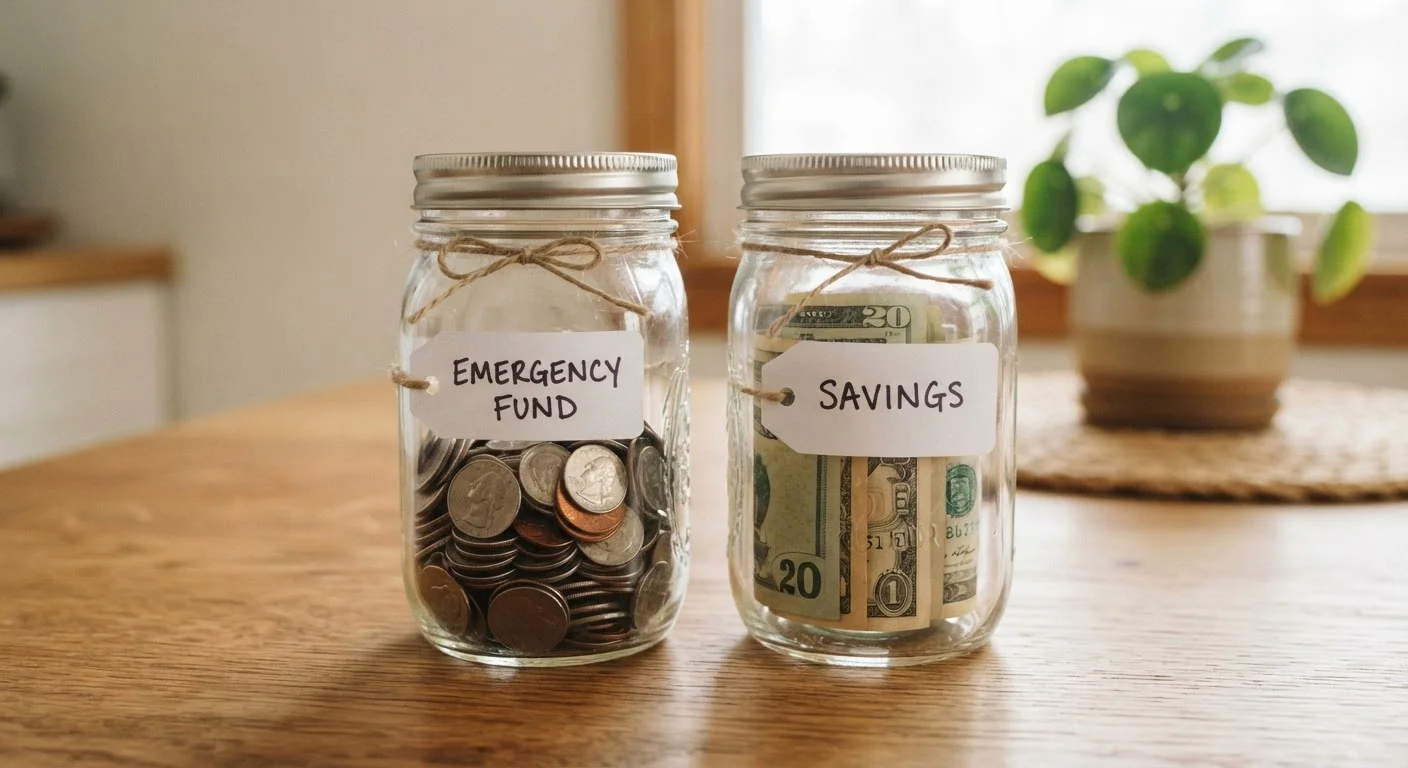
Photo credit: TurboBlogs.net | Explore Blogs At Turbo Speed
In this article
Many Americans confuse emergency funds with regular savings. Learn how each serves a distinct financial purpose and why both matter.
Key Takeaways
- An emergency fund is reserved strictly for unplanned, urgent expenses - not discretionary spending.
- A savings account is a bank product; an emergency fund is a financial strategy that can live inside one.
- Most financial educators recommend keeping three to six months of essential expenses in an emergency fund.
- Savings accounts are best used for intentional, goal-driven accumulation rather than crisis coverage.
- Both tools serve distinct roles and work best when maintained simultaneously, not interchangeably.
Why the Confusion Exists
Both an emergency fund and a savings account involve setting money aside - so it's easy to treat them as the same thing. Many Americans park all their saved dollars in one place and call it done. The problem is that mixing these two functions together often means neither works as intended: you either drain your safety net on predictable expenses, or you hesitate to touch your savings when a real emergency strikes.
Understanding what each term actually means - and what job each does - is the first step toward a more resilient financial foundation. As part of a broader approach to saving and building long-term wealth, keeping these two concepts clearly separated pays dividends.
| Criterion | Emergency Fund | Savings Account |
|---|---|---|
| Purpose | Cover unexpected financial crises | Accumulate money for planned goals |
| What it is | A financial strategy | A bank deposit product |
| When to use it | Only during genuine emergencies | When goal target or timeline is reached |
| Recommended size | 3-6 months of essential expenses | Varies by goal amount and timeline |
| Liquidity needed | High - accessible within 1-2 days | Moderate - depends on account type |
| Where it's kept | Often a high-yield savings account | HYSA, CD, money market account |
| Overlap risk | Risk of spending it on non-emergencies | Risk of treating it as an emergency fund |
What an Emergency Fund Actually Is
An emergency fund is not a bank product - it's a financial strategy. It's a dedicated pool of money set aside only for genuine, unforeseen financial emergencies: sudden job loss, an unexpected medical bill, a major car repair, or a broken furnace in January. The key word is unplanned. If you knew it was coming, it wasn't an emergency.
Most financial educators suggest targeting three to six months of essential living expenses - rent or mortgage, utilities, groceries, and minimum debt payments. Those with variable income or dependents may benefit from keeping closer to six months' worth on hand.
57%
Americans unable to cover a $1,000 emergency
A Bankrate survey found that a majority of U.S. adults could not pay for a $1,000 unexpected expense from savings alone.
3-6 months
Recommended emergency fund coverage
This widely cited benchmark, supported by financial educators and consumer finance agencies, refers to essential monthly living expenses.
Crucially, an emergency fund should be liquid (accessible within a day or two) and stable (not subject to market fluctuation). That's why many people keep it in a high-yield savings account - though the account itself is just the container, not the strategy. Learn more about what to look for in opening a high-yield savings account.
What a Savings Account Is - and What It's For
A savings account is a deposit account offered by banks and credit unions that earns interest on the money you hold there. It's a tool - one that can serve many different financial purposes depending on how you use it.
When used intentionally, a savings account becomes a goal-based vehicle: saving for a vacation, a home down payment, a new appliance, or holiday gifts. These are planned expenses with a target amount and a timeline. This is where the savings account truly shines - accumulating money systematically toward something specific.
Savings accounts come in several varieties with meaningfully different interest rates and trade-offs. Our breakdown of HYSAs, CDs, and money market accounts can help you match the right account type to your goal. For a more structured approach to planned expenses, sinking funds are another strategy worth understanding alongside savings accounts.
Savings Accounts vs. Checking Accounts
Savings accounts are distinct from checking accounts, which are designed for everyday transactions. Savings accounts typically earn interest and may limit the number of monthly withdrawals, making them better suited for money you don't need to access constantly. Keeping goal-based savings separate from your checking account also reduces the temptation to spend it impulsively.
How to Maintain Both Without Confusion
The practical solution is separation - keep your emergency fund and your goal-based savings in distinct accounts, ideally labeled clearly in your banking app. Many banks allow you to open multiple savings accounts and name each one. This simple organizational step prevents you from accidentally spending your emergency reserve on a weekend trip.
If you're starting from zero, prioritize the emergency fund first. Even a starter fund of $1,000 can absorb minor crises before you reach a full three-to-six-month cushion. Once that foundation is in place, redirect surplus income toward goal-specific savings. Think of it as building floors in a financial house: the emergency fund is the ground floor - everything else gets built on top of it. For broader guidance on managing your money across categories, explore the Budgeting Basics hub.
This article is for general informational and educational purposes only and does not constitute personalized financial advice. Consult a qualified financial professional regarding your specific circumstances.

Author
Personal Finance Editorial Team
Personal Finance Editorial Team is the collective byline for our editorial team and contributor network. Articles published under this byline or an editorial pen name are researched, written, and reviewed according to our editorial standards for clarity, consistency, and independence before publication.
View all articles →