
Reading Your Auto Insurance Policy Without Getting Lost
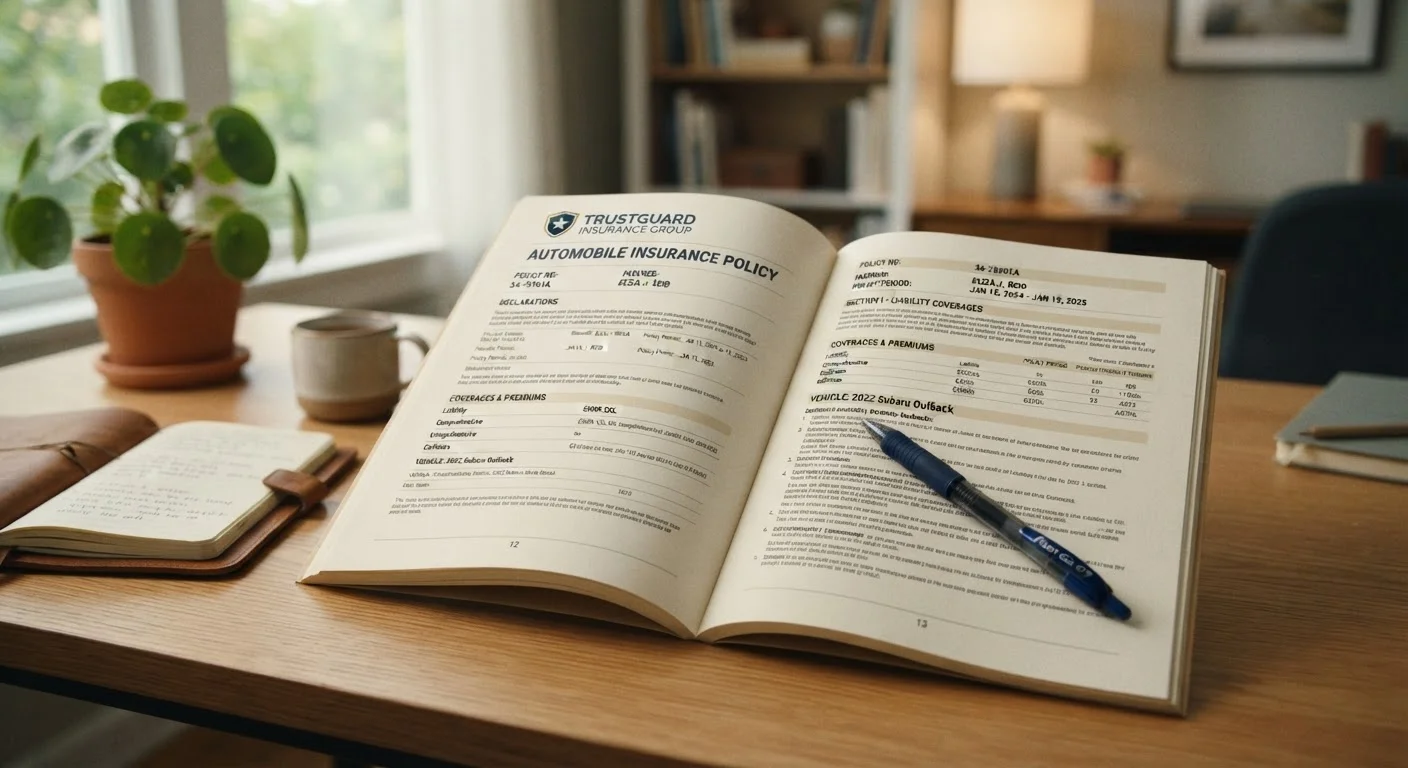
Photo credit: TurboBlogs.net | Explore Blogs At Turbo Speed
In this article
Declarations page, exclusions, endorsements—your policy has a clear structure. Here's how to navigate it so you know exactly what you're covered for.
Key Takeaways
- Every auto insurance policy follows a predictable structure: declarations, insuring agreement, exclusions, conditions, and endorsements.
- The declarations page summarizes your coverage limits, deductibles, and premium in one place - always start here.
- Exclusions define what your policy won't cover and are just as important to read as what it will.
- Endorsements are add-ons that modify your base policy and can expand or restrict your coverage.
- Reading your policy before a claim - not after - prevents costly surprises.
Why the Policy Document - Not the Summary - Is What Matters
Auto insurers provide brochures, online portals, and coverage summaries that make your policy easy to glance at. But these are not your contract. The actual policy document - the multi-page, legally binding agreement you receive when you purchase coverage - is the only document that determines what gets paid when you file a claim.
Most drivers never read past the declarations page, and many don't read that. This gap between assumed coverage and actual coverage is precisely where disputes arise. If you've ever wondered whether your insurer is obligated to pay for something, the answer is always in the policy - not in a conversation with an agent or a summary card.
Auto insurance policies in the United States follow a largely standardized structure. Once you learn how they're organized, reading any policy becomes a predictable exercise rather than an intimidating one. For a broad primer on how coverage types and policy mechanics work together, start with our guide to auto insurance fundamentals.
What you will need
How to Read Your Policy Step by Step
The six steps below walk you through each section of a standard personal auto policy in the order you should read them. Gather your policy document and declarations page before you begin.
Policy Document (paper or PDF)
The primary document you'll read and annotate throughout this process.
Declarations Page
The summary sheet showing your insured vehicles, drivers, coverage types, limits, and premium.
State Insurance Department Website
A free resource for verifying your state's minimum coverage requirements and filing complaints.
Licensed Insurance Agent
A professional who can clarify confusing policy language and confirm what your coverage includes.
Locate and Review the Declarations Page
The declarations page - sometimes called the "dec page" - is typically the first page of your policy packet. It summarizes the entire policy at a glance: the named insured(s), vehicle(s) covered, policy period, coverage types selected, coverage limits, deductibles, and the total premium.
Verify that your name, address, vehicle information (make, model, year, VIN), and listed drivers are all accurate. Any errors here should be corrected with your insurer immediately, as inaccuracies can affect claim outcomes.
Read the Insuring Agreement
The insuring agreement is the section where your insurer formally states what it promises to do - typically, to pay covered losses up to the stated policy limits in exchange for your premium. This section defines the basic coverage promise and the conditions under which it applies.
This section is usually written broadly, which is intentional - the specific limits of that promise are narrowed in the exclusions and conditions sections that follow. Understanding the insuring agreement gives you the foundation for interpreting everything else.
Study the Definitions Section
Most policies include a definitions section that assigns precise legal meanings to key terms used throughout the document. Words like "insured," "occurrence," "covered auto," and "bodily injury" carry specific meanings in your policy that may differ from everyday usage.
Read these definitions before moving deeper into the policy. When you encounter a capitalized or quoted term later in the document, refer back here to confirm exactly what it means in the context of your contract. This step prevents misinterpretation of your actual coverage.
Examine the Coverage Sections
Your policy will contain separate sections for each type of coverage you've purchased - liability, collision, comprehensive, uninsured/underinsured motorist, medical payments, and any others. Each section describes what that coverage pays for, when it applies, and to whom.
For a thorough explanation of how these coverage types work, see our guide on liability, collision, and comprehensive coverage. Pay particular attention to coverage limits and deductibles within each section, as these directly determine what you'd receive after a covered loss.
Read Every Exclusion
Exclusions are the specific situations, losses, or circumstances your policy will not cover. They are often organized by coverage type and can significantly narrow what you assumed was included.
Common exclusions in personal auto policies include: damage occurring while the vehicle is used for commercial purposes (such as delivery or rideshare), intentional acts, wear and tear, and losses that fall under a separate policy like business auto coverage. Reviewing these carefully helps you identify coverage gaps before a claim arises - not during one. For a broader look at where drivers misread their coverage, see common auto insurance misconceptions.
Review the Conditions and Endorsements
The conditions section outlines the obligations both you and your insurer must fulfill - such as your duty to report a claim promptly, cooperate with the insurer's investigation, and pay premiums on time. Failing to meet a condition can jeopardize a claim.
Endorsements (also called riders or amendments) are attached documents that modify the base policy. They may add coverage not included in the standard form, restrict an existing coverage, or adjust how a term is defined for your specific policy. Always read every endorsement, as they override the base policy language where they conflict.
Keep a Marked-Up Copy of Your Policy
As you read through each section, highlight your coverage limits, note your deductibles, and flag any exclusions that seem relevant to how you use your vehicle. A annotated copy is far more useful during a claim than a pristine, unread document. Store a digital backup alongside the physical copy.
Policy Language Is Legally Binding
Your insurance policy is a legal contract. The definitions, exclusions, and conditions printed in the document govern your coverage - not verbal summaries from an agent or marketing materials. If something you were told verbally isn't in the policy, it generally isn't enforceable. Always verify coverage in writing.
Don't Skip the Exclusions Section
Many policyholders only read what their insurance covers and skip the exclusions entirely. This is where most claims disputes originate. Common exclusions include intentional damage, using a personal vehicle for rideshare work, and certain natural disasters. Read this section carefully and ask your insurer if anything is unclear.
Once you've worked through the full document, note any coverage you believe may be missing for your situation - such as a gap in protection for a vehicle used occasionally for work purposes. Life changes can also shift what coverage is appropriate; our checklist on reviewing your policy when life changes is a useful next step. And if the relationship between your deductible and your premium still feels unclear, see our explanation of how the deductible-premium trade-off works.
This article is for general informational purposes only and does not constitute personalized insurance, legal, or financial advice. Coverage terms, exclusions, and regulations vary by insurer, policy, and state. Consult a licensed insurance agent or adviser and review your actual policy documents for guidance specific to your situation.

Author
Autos & Insurance Editorial Team
Autos & Insurance Editorial Team is the collective byline for our editorial team and contributor network. Articles published under this byline or an editorial pen name are researched, written, and reviewed according to our editorial standards for clarity, consistency, and independence before publication.
View all articles →