
Selling Your Car Privately vs. Trading It In: What Changes and What Doesn't
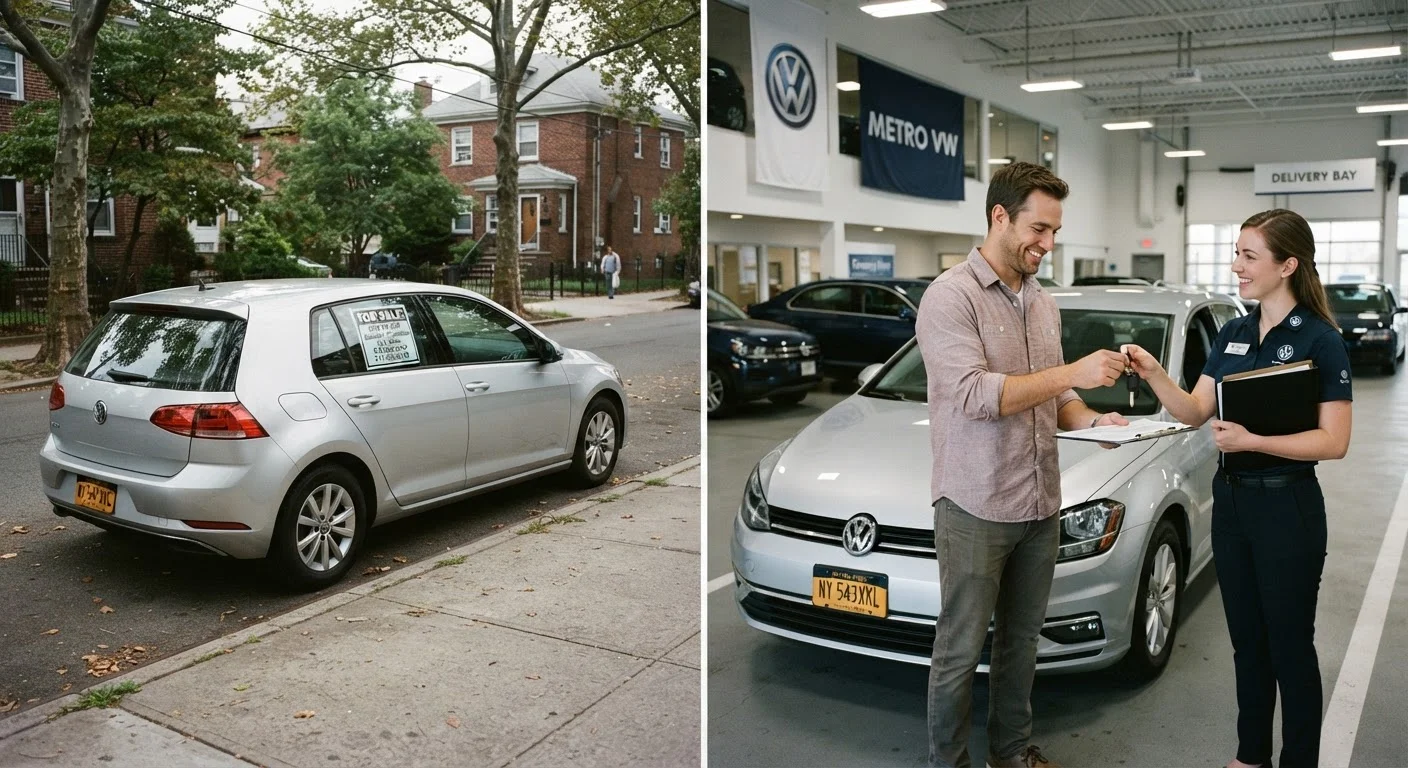
Photo credit: TurboBlogs.net | Explore Blogs At Turbo Speed
In this article
Understand the process, effort, and financial differences between a private-party sale and a dealership trade-in.
Key Takeaways
- Private sales typically yield a higher sale price, but require considerably more time and effort from the seller.
- Trade-ins offer speed and convenience, but dealers factor in resale margin, so offers are usually lower.
- Both routes require the same basic paperwork: title, odometer disclosure, and a bill of sale.
- Your state's tax rules may affect whether a trade-in saves you money on a new purchase.
- The right choice depends on your vehicle's condition, your timeline, and how much you value simplicity.
How Each Route Works
When you sell a car privately, you manage the entire process: setting a price, creating listings, fielding inquiries, arranging test drives, negotiating directly with buyers, and handling all transfer paperwork. When you trade in at a dealership, you hand the car over to the dealer as part - or all - of the transaction, and they handle resale on their end.
Both paths end with you no longer owning the vehicle and receiving some form of compensation, but the experience getting there is quite different. Understanding those differences helps you choose based on your actual situation rather than a general rule of thumb. See also our complete guide to car ownership for context on the full ownership cycle.
| Private Sale | Dealer Trade-In | |
|---|---|---|
| Typical sale price | Closer to retail market value | Wholesale or near-wholesale value |
| Time to complete | Days to weeks | Same day or a few hours |
| Effort required | High - listing, vetting, negotiating | Low - appraisal and paperwork only |
| Buyer vetting / safety | Seller's responsibility | Not applicable |
| Title transfer | Seller handles with buyer | Dealer manages |
| Sales tax benefit | None | May reduce tax on next purchase (state-dependent) |
| Best vehicle condition fit | Excellent to good condition | Any condition accepted |
The Financial Difference: Why Private Sales Usually Pay More
Dealers buy your car at wholesale or near-wholesale value. They need room to recondition the vehicle, cover carrying costs, and earn a profit when they resell it. That margin - often several thousand dollars on a typical used car - comes out of what they offer you.
Private buyers, by contrast, pay closer to retail market value because they're acquiring the car for personal use, not resale. Depending on the vehicle, the price gap between a dealer offer and a strong private listing can range from a few hundred to several thousand dollars.
$1,000-$3,000+
Typical private vs. trade-in price gap
Industry observers commonly note that private-party sale prices exceed dealer trade-in offers by this range for average used vehicles, though the gap varies by make, model, and market conditions.
~40%
Used car sellers who choose trade-in
A significant share of sellers opt for dealer trade-ins primarily for the convenience factor, even when aware that private sales may yield more money.
That said, some states allow you to deduct the trade-in value from a new vehicle's purchase price before calculating sales tax. In those states, the tax savings can meaningfully narrow - or occasionally close - the gap between a private sale and a trade-in. Check your state's Department of Motor Vehicles or tax authority for the rules that apply to you. This connects to broader ownership costs covered in our article on the true cost of owning a car.
Effort, Risk, and Timeline
The private sale advantage in price comes with a real cost in time and effort. You'll spend time photographing the car, writing accurate listings, responding to inquiries (including non-serious ones), vetting strangers before test drives, and navigating negotiations. Deals can fall through after significant back-and-forth, requiring you to restart.
There are also safety and fraud considerations. Meet buyers in public, well-lit locations, verify payment carefully - cashier's checks can be counterfeited - and consider using secure payment platforms or confirming funds before handing over the title.
Watch Out for Payment Fraud in Private Sales
Counterfeit cashier's checks and fake payment confirmation screenshots are among the most common scams targeting private car sellers. Never release the title or hand over the keys until funds have fully cleared in your bank account. When possible, complete the transaction at your bank or use a verified electronic transfer method.
Trade-ins, by comparison, can often be completed in an afternoon. Dealers appraise the vehicle on-site, present an offer, and handle the title transfer. If you're simultaneously purchasing a replacement vehicle, the convenience is compounded - the dealer rolls the equity into the deal and handles the paperwork for both transactions. For buyers weighing purchase options, our article on cash versus financing covers how that equity factors into your next purchase budget.
What Stays the Same Regardless of Method
Whichever route you take, certain fundamentals don't change. You must hold a clear, lien-free title to transfer ownership - if you still owe money on the car, that balance must be settled (either by you or through the transaction itself) before the sale completes. Both routes also require an odometer disclosure statement in most states, and a bill of sale is advisable in either case as a record of the transaction.
Your vehicle's condition affects your outcome either way. A well-maintained car with service records commands better offers from dealers and attracts stronger private buyers. Deferred maintenance, undisclosed damage, or a salvage title will suppress value in both markets - private buyers may simply walk away, while dealers will factor those issues into a lower offer.
Finally, doing your homework on market value is essential in both scenarios. Reference multiple valuation sources to understand the realistic range for your specific vehicle before you list it or walk into a dealership. Going in without a number in mind puts you at a disadvantage regardless of which path you've chosen.

Author
Autos & Insurance Editorial Team
Autos & Insurance Editorial Team is the collective byline for our editorial team and contributor network. Articles published under this byline or an editorial pen name are researched, written, and reviewed according to our editorial standards for clarity, consistency, and independence before publication.
View all articles →