
What That Crack in Your Wall Is Actually Telling You
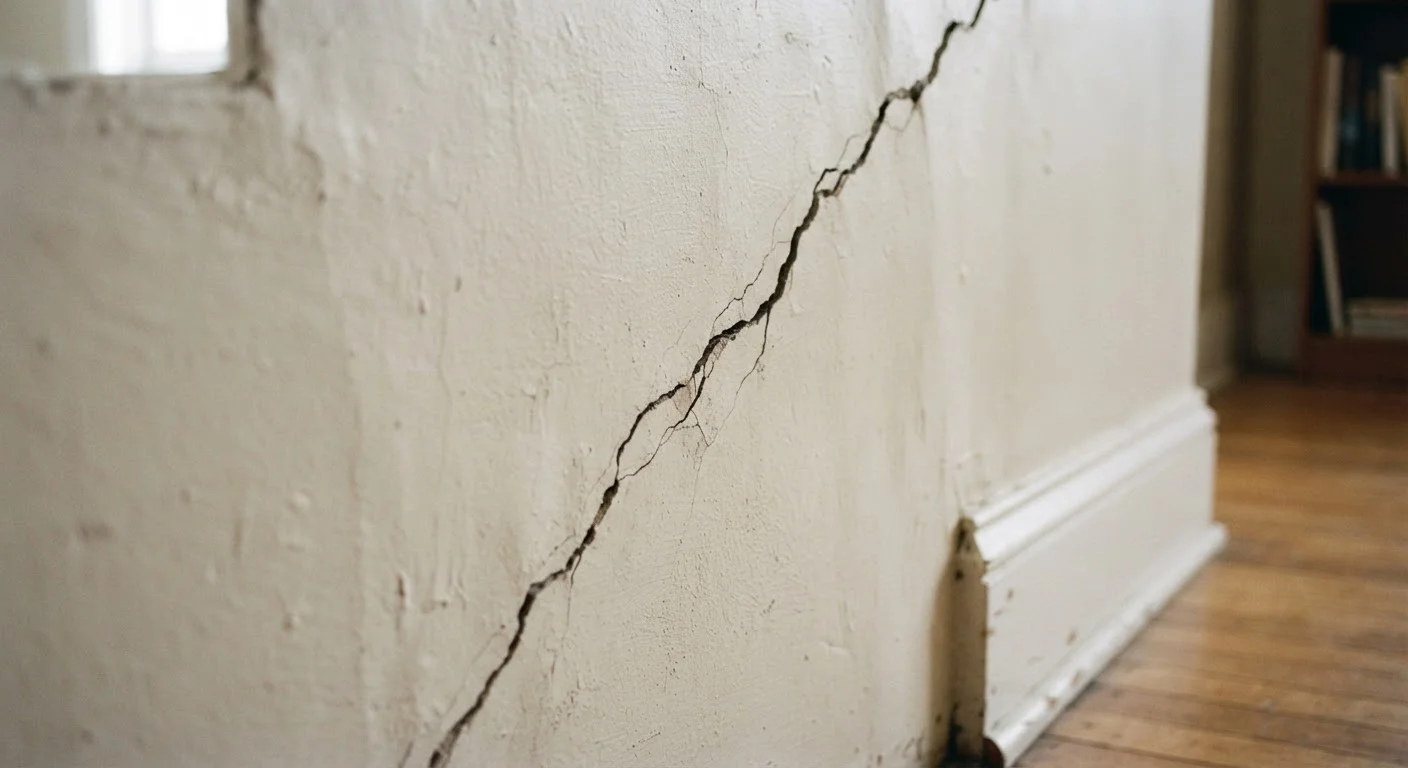
Photo credit: TurboBlogs.net | Explore Blogs At Turbo Speed
Hairline settling cracks versus structural warning signs: learn how to read the size, shape, and location of wall cracks before calling a pro.
Key Takeaways
- Hairline cracks under 1/16 inch wide are usually cosmetic and caused by normal settling.
- Horizontal cracks in basement or foundation walls are among the most serious warning signs.
- Crack width, direction, and location together determine whether a professional evaluation is needed.
- Cosmetic patching without diagnosing the underlying cause can mask worsening structural problems.
Why Wall Cracks Aren't All Created Equal
Most homeowners discover a crack in a wall and immediately imagine the worst - or, just as problematically, reach for a tube of spackle and forget about it. Both reactions can be costly. Wall cracks range from completely benign signs of a house settling over decades to genuine indicators of foundation movement or moisture intrusion that demand professional attention.
Reading a crack correctly comes down to three factors: its width, its orientation, and its location in the home. Understanding how these factors interact helps you make an informed decision about whether to monitor, repair, or call a licensed structural engineer or contractor.
This is also why understanding a home inspection report matters so much - inspectors flag cracks using exactly this kind of systematic assessment, and knowing what they're looking for helps you interpret their findings accurately.
Myth
Any crack in a wall means the house has a serious structural problem.
Fact
The vast majority of interior wall cracks are cosmetic, caused by normal seasonal movement and long-term settling.
Wood framing expands and contracts with humidity and temperature changes throughout the year. Drywall compound shrinks slightly as it cures. These forces produce hairline cracks - typically less than 1/16 inch wide - that are completely normal in homes of any age. They do not indicate structural failure and generally require nothing more than routine cosmetic repair.
Myth
If a crack has been there for years without getting worse, it's definitely nothing to worry about.
Fact
A stable crack is reassuring, but location and orientation still matter - some patterns are inherently higher risk regardless of age.
Horizontal cracks in poured concrete or block foundation walls can be stable for a period and still represent significant lateral pressure from soil or water. The same applies to stair-step cracking in brick that runs along mortar joints near corners. Stability reduces urgency but doesn't eliminate the need for a qualified assessment when the crack type is inherently serious.
Myth
Patching a crack with spackle or caulk fixes the underlying problem.
Fact
Cosmetic repair addresses appearance only - if a structural or moisture issue is driving the crack, it will return and potentially worsen.
Filling a crack without diagnosing its cause is like placing a bandage over an infected wound. If the crack is caused by ongoing foundation movement, soil settlement, or chronic water intrusion, the repair will fail and the underlying condition will continue to develop - sometimes invisibly, until the damage is significantly more expensive to address. Always confirm the cause before committing to a cosmetic fix.
Myth
Diagonal cracks in drywall always mean foundation trouble.
Fact
Diagonal cracks radiating from window and door corners are extremely common and almost always caused by normal stress concentration, not foundation movement.
Openings like windows and doors are natural weak points in a wall system. The framing around them experiences more stress during seasonal movement, and drywall compound cracks along these stress lines predictably over time. Unless the crack is wide (approaching 1/4 inch), continues to grow, or is accompanied by doors or windows that stick or won't close properly, diagonal cracks at corners are generally cosmetic.
Myth
Only old houses develop serious structural cracks.
Fact
Foundation and structural cracks can appear in newer homes too, particularly due to soil conditions, drainage problems, or construction defects.
Expansive clay soils, poor site drainage, and improperly compacted fill beneath a slab can cause significant movement in homes that are only a few years old. New construction is not immune. Homeowners in areas with high clay content or variable soil moisture should be especially attentive to cracking patterns even in relatively new properties. Consulting a geotechnical or structural engineer is advisable when cracking appears early and progresses quickly.
How to Assess a Crack Before Calling Anyone
A basic assessment takes only a few minutes and gives you genuinely useful information. First, measure the crack at its widest point. A credit card edge is roughly 0.03 inches - if the crack is narrower than that, it's almost certainly cosmetic. Anything approaching 1/4 inch or wider, or any crack you can insert a pencil tip into, warrants a closer look.
Next, consider the pattern. Stair-step cracking along mortar joints in brick or block walls typically signals differential settlement - meaning one part of the foundation is sinking at a different rate than another. A single vertical crack in poured concrete that is uniform in width throughout may simply reflect concrete shrinkage. A horizontal crack in a basement wall, however, can indicate lateral soil pressure pushing inward - one of the more serious scenarios a homeowner can encounter.
~60%
Homes affected by foundation movement
The American Society of Civil Engineers has estimated that a significant majority of structures in the U.S. are built on problematic soils, with expansive soils alone causing billions of dollars in damage annually.
1/4 inch
Crack width threshold for professional evaluation
Structural engineers and home inspectors commonly cite cracks at or exceeding 1/4 inch in width as a threshold warranting formal professional assessment.
Finally, monitor the crack over four to six weeks by marking its ends with pencil and dating the marks. An active crack that continues to grow needs professional evaluation. A static crack that hasn't changed in months is far less urgent. For a broader framework on tracking issues like this over time, see our guide on building a home maintenance schedule.
When you're ready to address cosmetic cracks yourself, patching drywall correctly requires confirming there's no structural or moisture issue behind the wall first - patching over a symptom doesn't resolve the cause.
When to Stop Monitoring and Act Immediately
If you observe a crack that is wider than 1/4 inch, is accompanied by bowing or bulging walls, causes doors or windows to suddenly bind or gap, or appears alongside water intrusion in a basement or crawl space, do not delay seeking a professional evaluation. These combinations of symptoms can indicate active structural movement. Engaging a licensed structural engineer - not just a general contractor - is the appropriate first step when foundation integrity is in question.

Author
Home & Real Estate Editorial Team
Home & Real Estate Editorial Team is the collective byline for our editorial team and contributor network. Articles published under this byline or an editorial pen name are researched, written, and reviewed according to our editorial standards for clarity, consistency, and independence before publication.
View all articles →