
Pet Nutrition Labels Decoded: What the Ingredients List Actually Means
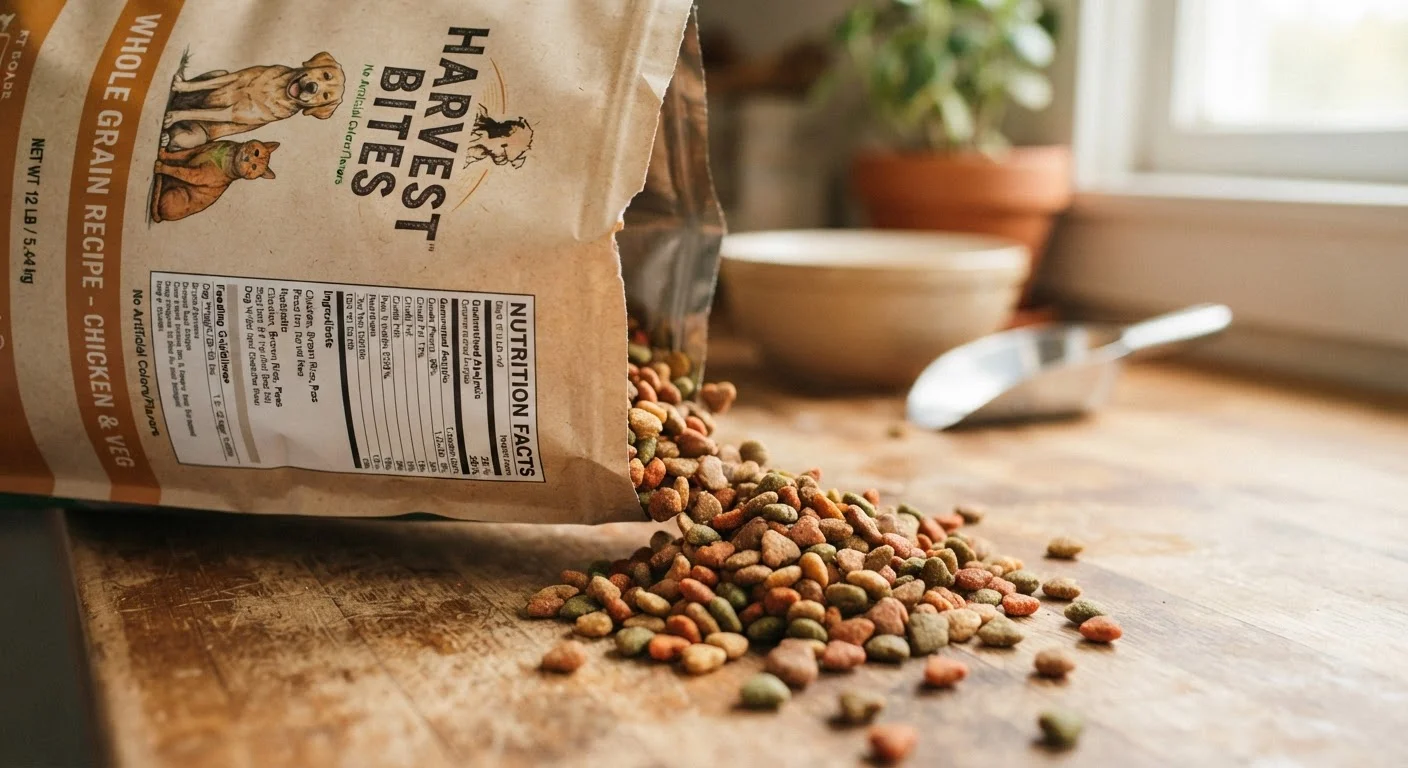
Photo credit: TurboBlogs.net | Explore Blogs At Turbo Speed
In this article
Pet food labels follow specific regulatory rules. Learn how to read ingredient lists, guaranteed analysis, and AAFCO statements accurately.
Key Takeaways
- Ingredients are listed by pre-cooking weight, not nutritional contribution after processing.
- AAFCO sets legal definitions for ingredient names, so terms like 'chicken meal' have precise regulatory meanings.
- The guaranteed analysis panel shows minimum or maximum nutrient percentages, not exact amounts.
- An AAFCO nutritional adequacy statement tells you whether a food is complete and balanced for a specific life stage.
- Ingredient splitting - listing related ingredients separately - can affect how high each appears on the list.
- No single ingredient signals quality on its own; context and the full label matter more.
Why Pet Food Labels Have Their Own Rulebook
Pet food labels in the United States are regulated at both the federal and state level. The FDA oversees labeling accuracy and safety, while AAFCO - the Association of American Feed Control Officials - establishes model regulations that most states adopt. This means ingredient terms aren't marketing language; they carry legal definitions. 'Chicken' must be clean chicken flesh. 'Chicken meal' must be rendered and dried chicken tissue. 'Chicken by-product meal' has its own distinct definition. Knowing the framework exists is the first step to reading a label with confidence.
This regulatory structure is similar in purpose to how human food labels work - if you've ever learned to read a nutrition facts panel for yourself, some of that thinking transfers. See our guide to reading nutrition labels for a useful comparison of how label rules shape what you see.
State Adoption of AAFCO Rules Varies
While AAFCO publishes model regulations, individual states decide whether and how to adopt them into law. Most states have aligned closely with AAFCO standards, but enforcement and specifics can differ. If you have questions about a specific product or claim, your state's department of agriculture is the relevant regulatory body.
The Ingredient List: Order, Weight, and What It Hides
Every ingredient in a pet food is listed in descending order of weight as added - meaning before any cooking or processing occurs. This single fact reshapes how you read the list. A raw protein like chicken contains roughly 70-75% water, so it naturally weighs more at the time of inclusion. A dry ingredient like rice or oatmeal loses little to moisture, so it may appear lower on the list even if it contributes a comparable dry-weight proportion of the final product.
This is also where ingredient splitting becomes relevant. If a manufacturer uses several forms of the same base ingredient - say, brown rice, rice flour, and rice bran - each appears as a separate entry. Individually, none may rank near the top. Collectively, they could outweigh any single ingredient. Neither approach is inherently dishonest, but understanding it prevents you from over-interpreting rankings.
70-75%
Water content in raw chicken before processing
This high moisture level explains why raw protein ingredients rank high on ingredient lists despite losing weight during cooking.
4
Required guaranteed analysis nutrients on U.S. pet food labels
AAFCO model regulations require crude protein, crude fat, crude fiber, and moisture to appear on every complete pet food label.
2
Methods to substantiate an AAFCO adequacy claim
Manufacturers may substantiate nutritional claims either through controlled animal feeding trials or by formulating to AAFCO's published nutrient profiles.
Guaranteed Analysis: Percentages, Not Promises
Below the ingredient list, the guaranteed analysis panel reports key nutrient levels as minimum or maximum percentages: crude protein (minimum), crude fat (minimum), crude fiber (maximum), and moisture (maximum). These are regulatory floor-and-ceiling figures, not precise measurements of what's in each bag. 'Minimum 26% crude protein' means at least that much - but possibly more. Crude fiber maximums work the opposite way.
Comparing guaranteed analysis numbers across foods can be misleading unless you account for moisture content. A wet food might show 8% protein while a dry food shows 28%, but on a dry-matter basis - stripping out moisture - the wet food could deliver comparable protein. A veterinarian or veterinary nutritionist can help you make apples-to-apples comparisons if your pet's diet management depends on it.
Food costs are often tied closely to protein sources and processing quality - if you're curious how nutrition choices connect to your overall pet budget, our piece on the real cost of owning a pet offers useful context.
Convert to Dry-Matter Basis Before Comparing Foods
When evaluating protein or fat levels across wet and dry foods, divide the nutrient percentage by (100 minus the moisture percentage), then multiply by 100. This dry-matter calculation levels the field between products with very different water contents. Your veterinarian's office can also help run these numbers if you're managing a health condition through diet.
AAFCO Adequacy Statements and Life Stage Nutrition
Perhaps the most decision-relevant section of any pet food label is the AAFCO nutritional adequacy statement. This line tells you two things: whether the food is formulated to be 'complete and balanced,' and for which life stage - growth (puppies or kittens), adult maintenance, reproduction, or all life stages. Foods labeled for 'all life stages' must meet the higher nutritional thresholds required for growth and reproduction.
The statement also indicates how the claim was substantiated: either through feeding trials (animals were fed the food under controlled conditions) or by calculating against AAFCO's nutrient profiles. Both are accepted methods, but they represent different levels of real-world testing. Foods with no adequacy statement at all are typically labeled as 'intended for intermittent or supplemental feeding only' - a meaningful distinction for animals eating that food as their primary diet.
Life stage nutrition becomes especially important as pets age. Senior animals often have shifting protein, phosphorus, and caloric needs. For more on how nutritional requirements evolve, see our article on senior pet care and nutritional changes.
Frequently Asked Questions

Author
Lifestyle & Shopping Editorial Team
Lifestyle & Shopping Editorial Team is the collective byline for our editorial team and contributor network. Articles published under this byline or an editorial pen name are researched, written, and reviewed according to our editorial standards for clarity, consistency, and independence before publication.
View all articles →