
Why 'I'll Start Investing Later' Costs More Than You Think
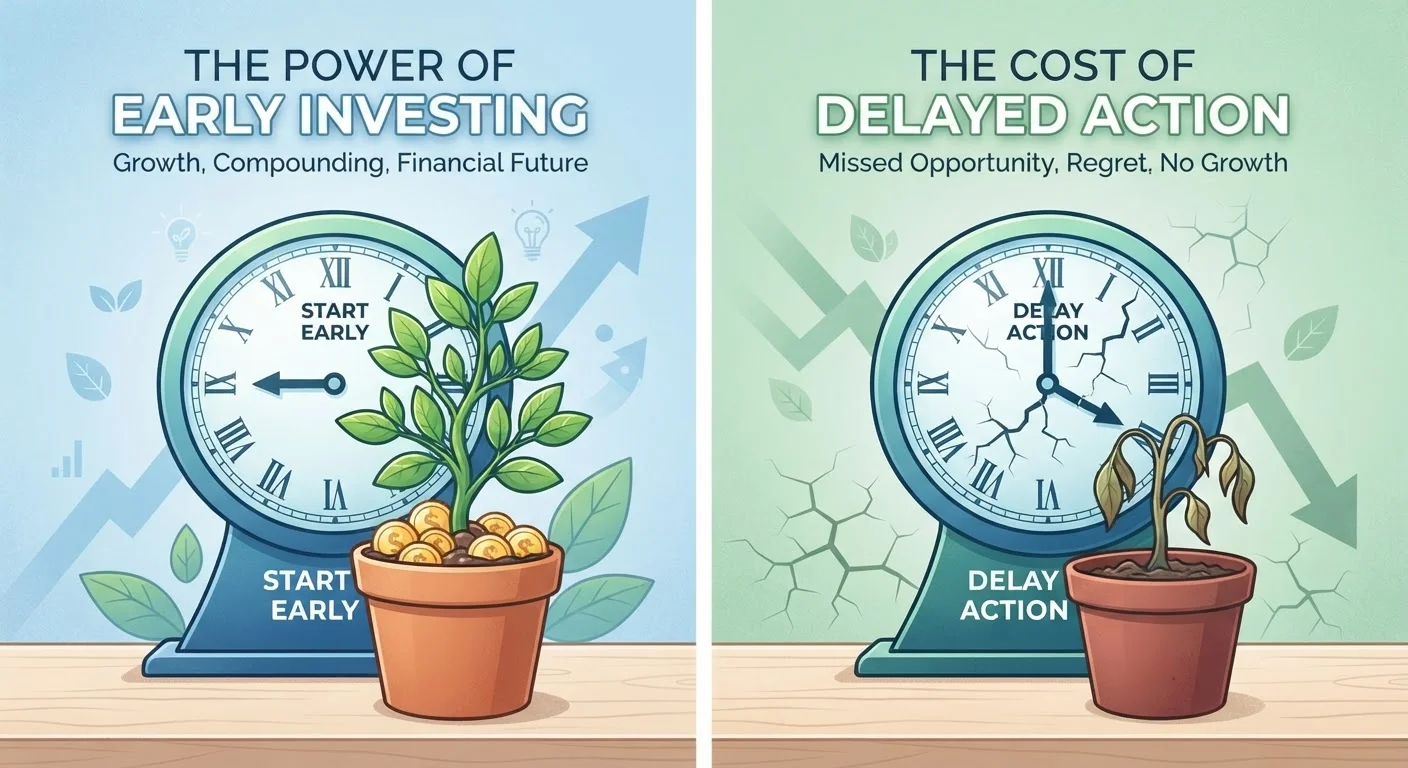
Photo credit: TurboBlogs.net | Explore Blogs At Turbo Speed
In this article
Postponing investing—even by a few years—can significantly reduce long-term wealth. Here's the financial reality behind waiting and what you can do instead.
Key Takeaways
- Delaying investing by even five years can reduce your final portfolio by tens of thousands of dollars due to compounding.
- Many common reasons for postponing - waiting for more money, less debt, or a 'better time' - are largely myths.
- Small, consistent contributions started early outperform larger contributions started late in nearly every scenario.
- Employer-matched retirement accounts and tax-advantaged accounts are often the best starting points for new investors.
- General financial education, not perfect conditions, is what most people actually need to begin investing.
The Hidden Price Tag on 'Not Yet'
Most people know they should invest. Far fewer understand what it actually costs to wait. The answer isn't abstract - it's a specific, calculable number that grows larger with every passing year.
The engine driving that cost is compound growth: the process by which investment returns generate their own returns over time. Because compounding accelerates the longer it runs, the early years of an investment account are disproportionately valuable. A dollar invested at 25 does not simply grow more than a dollar invested at 35 - it can grow dramatically more, because it has ten additional years to compound before retirement.
To understand the math more deeply, see our explanation of how compound interest actually works. The core takeaway is simple: time in the market is one of the few truly free advantages available to any investor, and delay permanently surrenders a portion of it.
~$85,000
Estimated cost of a 10-year delay
Illustrative projections show that delaying a $200/month investment by 10 years (starting at 35 vs. 25) can reduce a retirement portfolio by roughly $85,000 or more at a 7% average annual return over 40 vs. 30 years.
56%
Americans without an emergency fund sufficient to cover 3 months of expenses
According to the Federal Reserve's Report on the Economic Well-Being of U.S. Households, a majority of Americans lack adequate financial cushions, which contributes to the cycle of deferring long-term investing.
33%
Private-sector workers not participating in a workplace retirement plan
The U.S. Bureau of Labor Statistics reports that roughly one-third of private-sector employees with access to a retirement plan do not participate, leaving employer matches and tax advantages unclaimed.
Common Mistakes That Keep People on the Sidelines
The decision to delay is rarely made once. It gets remade quietly, month after month, through habits of reasoning that feel sensible but carry real costs. Here are the most common errors - and how to correct them.
Waiting until debt is fully paid off before investing.
Why it happens: Debt feels like a financial emergency that must be resolved before any other goal is pursued. This logic is understandable but often counterproductive.
Assuming you need a large lump sum to get started.
Why it happens: Investing is often portrayed as something wealthy people do with substantial capital, leaving the impression that small amounts aren't worth the effort.
Waiting for the 'right moment' in the market.
Why it happens: Financial news constantly highlights market volatility, making it easy to believe that a better entry point is always just around the corner.
Treating investing as something to figure out 'later' once finances are sorted.
Why it happens: Personal finance can feel overwhelming, and investing is often viewed as an advanced topic requiring deep expertise before any action is taken.
Underestimating how much a few years actually matters.
Why it happens: A five-year gap feels manageable in isolation, and it's difficult to visualize how compounding transforms that gap into a large dollar difference over decades.
Many of these same patterns show up in budgeting as well. Our article on budgeting myths that prevent people from starting covers how similar reasoning keeps people from building savings at all.
What 'Starting Small' Actually Looks Like
One of the most persistent misconceptions about investing is that it requires a meaningful sum of money to begin. In practice, the opposite is often true: starting with a small amount immediately beats waiting until a larger amount is available.
Starting Small Beats Waiting to Start Big
A person who invests $100 per month beginning at age 25 will, under typical long-term return assumptions, end up with substantially more at retirement than someone who invests $300 per month beginning at age 40 - despite contributing far less total money. The advantage is not discipline or income; it is time. No amount of future contribution can fully recover years of forgone compounding.
Most employer-sponsored retirement plans - such as a 401(k) - allow contributions as low as 1% of a paycheck. If your employer offers a matching contribution, declining to participate means leaving earned compensation on the table. Tax-advantaged accounts like IRAs also allow annual contributions in accessible increments rather than requiring lump-sum deposits.
For a broader framework on moving from your first dollar to long-term wealth, the Saving and Investing overview covers account types, contribution strategies, and how to structure a starter investment plan. And if deeper doubts are keeping you from acting, common investing myths examined addresses many of the beliefs - like needing a lot of money or special expertise - that simply don't hold up.
This article is for general informational and educational purposes only and does not constitute personalized financial, investment, tax, or legal advice. Investing involves risk, including possible loss of principal. Past performance does not guarantee future results. Consult a qualified financial adviser or other licensed professional before making decisions about your own financial situation.

Author
Personal Finance Editorial Team
Personal Finance Editorial Team is the collective byline for our editorial team and contributor network. Articles published under this byline or an editorial pen name are researched, written, and reviewed according to our editorial standards for clarity, consistency, and independence before publication.
View all articles →