
Compound Interest: The Math Behind Growing Money Over Time
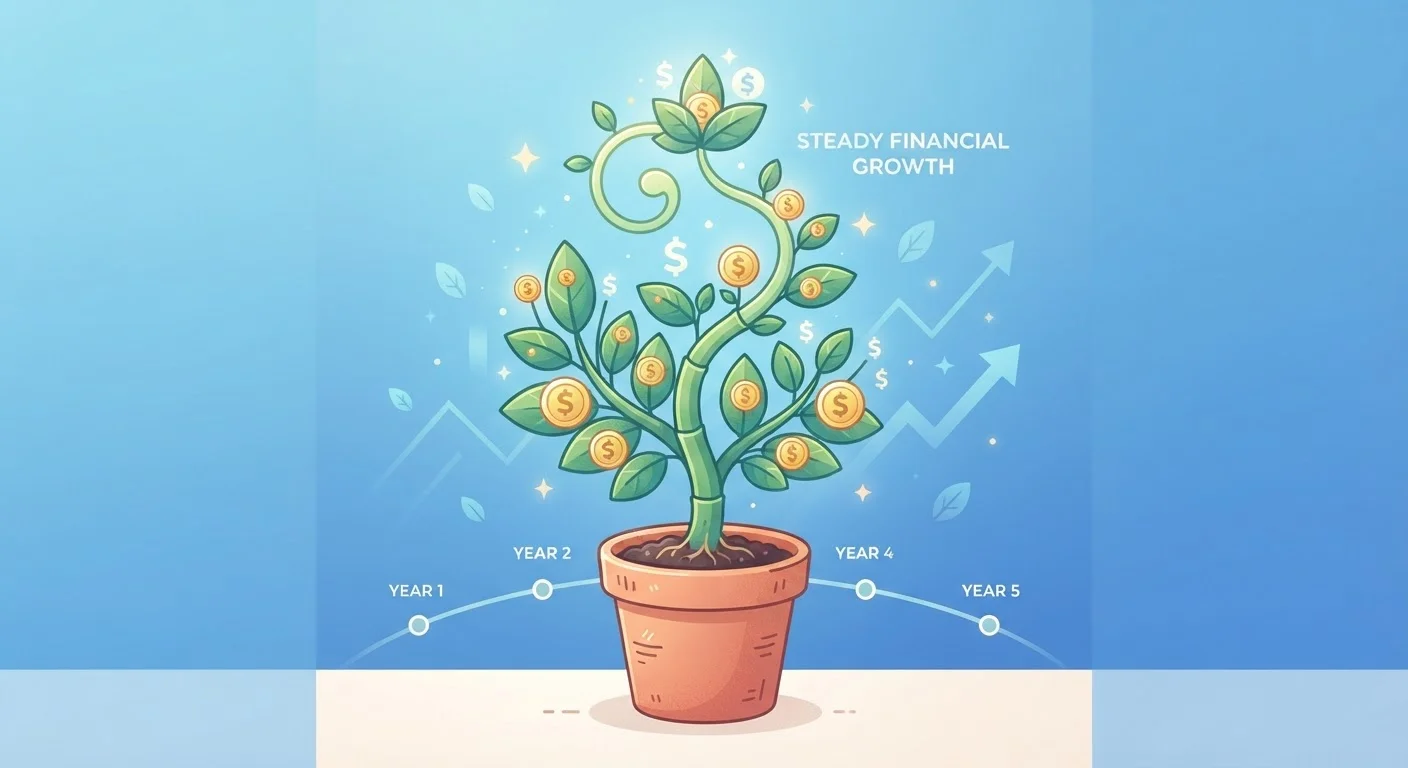
Photo credit: TurboBlogs.net | Explore Blogs At Turbo Speed
In this article
Compound interest is one of the most powerful forces in personal finance. Here's how it actually works and why starting early changes everything.
Key Takeaways
- Compound interest grows your money by earning returns on both your principal and previously earned interest.
- Starting earlier - even with smaller amounts - typically produces more wealth than starting later with larger contributions.
- Compounding frequency matters: daily or monthly compounding yields more than annual compounding at the same rate.
- Compound interest works against you on debt, accelerating what you owe if balances aren't paid down.
- Consistent contributions amplify compounding effects significantly over long time horizons.
How Compound Interest Actually Works
At its core, compound interest is interest on interest. When you deposit money into a savings account or invest in a retirement fund, you earn a return on your initial amount - the principal. With compounding, those earnings are then added to your balance, and your next period's interest is calculated on the new, larger total.
Consider a straightforward example: $1,000 deposited at a 5% annual interest rate. After year one, you've earned $50, giving you $1,050. In year two, that 5% applies to $1,050 - producing $52.50. By year three, you earn $55.13. The dollar amounts seem small early on, but the curve steepens dramatically over decades.
72
Years to double money (Rule of 72 at 6%)
Divide 72 by your annual return rate to estimate how many years it takes to double your balance - a long-established financial planning shortcut.
~10x
Potential growth of $10,000 over 40 years at 6%
At a 6% annual compound rate, $10,000 grows to roughly $102,857 over 40 years, illustrating the dramatic effect of long time horizons.
Daily
Most common compounding frequency for savings accounts
Many high-yield savings accounts compound interest daily, which produces marginally but meaningfully more growth than monthly or annual compounding at the same rate.
This acceleration is why compound interest is often called one of the most powerful forces in personal finance. It rewards patience and penalizes delay more than most people intuitively expect.
The Time Factor: Why Starting Early Changes Everything
Time is the single most powerful variable in compounding. A person who begins setting aside money in their mid-twenties and stops contributing entirely in their mid-thirties can still end up with more at retirement than someone who starts in their mid-thirties and contributes steadily for 30 years - simply because of the extra compounding years.
This is the financial reality explored in depth in our guide on the cost of delaying investing. The math is unambiguous: every year you wait reduces the time compounding has to work, and the lost growth is rarely recoverable by contributing more later.
Start With What You Have Today
You don't need a large sum to benefit from compounding - you need time. Even $25 or $50 per month invested consistently in a tax-advantaged account begins building a compounding base immediately. Waiting for a 'better time' or a raise before starting is one of the most common and costly financial delays everyday Americans make.
The practical takeaway is that even modest, consistent contributions made early carry outsized long-term value. Starting with what you have - rather than waiting until conditions feel ideal - is typically the better financial move. This principle is also central to the broader framework of saving and investing from your first dollar onward.
Compounding Frequency and What It Means for Your Money
Not all compounding is equal. The frequency at which interest is calculated - daily, monthly, quarterly, or annually - affects how quickly your balance grows. More frequent compounding means interest is being added to your balance more often, giving each new deposit a slightly larger base to work from.
Most high-yield savings accounts today compound daily or monthly. The difference between daily and annual compounding on a single account might appear minor in the short term, but it compounds (quite literally) into a meaningful gap over 20 or 30 years. When evaluating savings products, looking at the Annual Percentage Yield (APY) - which reflects compounding frequency - rather than just the nominal interest rate gives you a more accurate picture of actual growth.
APY vs. Interest Rate: Know the Difference
The stated interest rate on a savings account doesn't account for compounding frequency. The Annual Percentage Yield (APY) does. When comparing savings products, always compare APYs - not just nominal rates - to understand the actual return you'd receive. This comparison is general guidance; individual account terms vary and should be reviewed in full.
Compounding frequency also matters on the debt side. Credit card interest, for instance, typically compounds daily on unpaid balances. This is one reason high-interest debt can feel difficult to escape without a deliberate paydown strategy. For guidance on managing the credit side of your finances, see our long-term credit health guide.
Putting Compounding to Work in Your Financial Life
Understanding compound interest is only useful if it shapes how you manage your money. A few principles follow directly from the math:
- Prioritize consistency over size. Regular contributions - even small ones - build a compounding base that sporadic large deposits cannot easily match. This habit-driven approach is at the heart of what separates consistent savers from occasional ones.
- Reinvest earnings. In investment accounts, dividends and interest should generally be reinvested rather than withdrawn to keep compounding in motion.
- Minimize high-interest debt. Because compounding accelerates debt just as it accelerates savings, carrying balances on high-rate credit products works directly against your wealth-building efforts.
- Use tax-advantaged accounts where appropriate. Accounts like 401(k)s and IRAs allow compounding to work without annual tax drag, which meaningfully increases long-term accumulation.
A solid personal budget creates the financial room to make consistent contributions possible - and consistency is what unlocks compounding's full potential.
This article is for general informational and educational purposes only and does not constitute personalized financial, investment, or tax advice. Consult a qualified, licensed financial adviser before making decisions about your specific financial situation.
Frequently Asked Questions

Author
Personal Finance Editorial Team
Personal Finance Editorial Team is the collective byline for our editorial team and contributor network. Articles published under this byline or an editorial pen name are researched, written, and reviewed according to our editorial standards for clarity, consistency, and independence before publication.
View all articles →