
The Truth About Fast Charging: Separating Marketing Claims from Physics
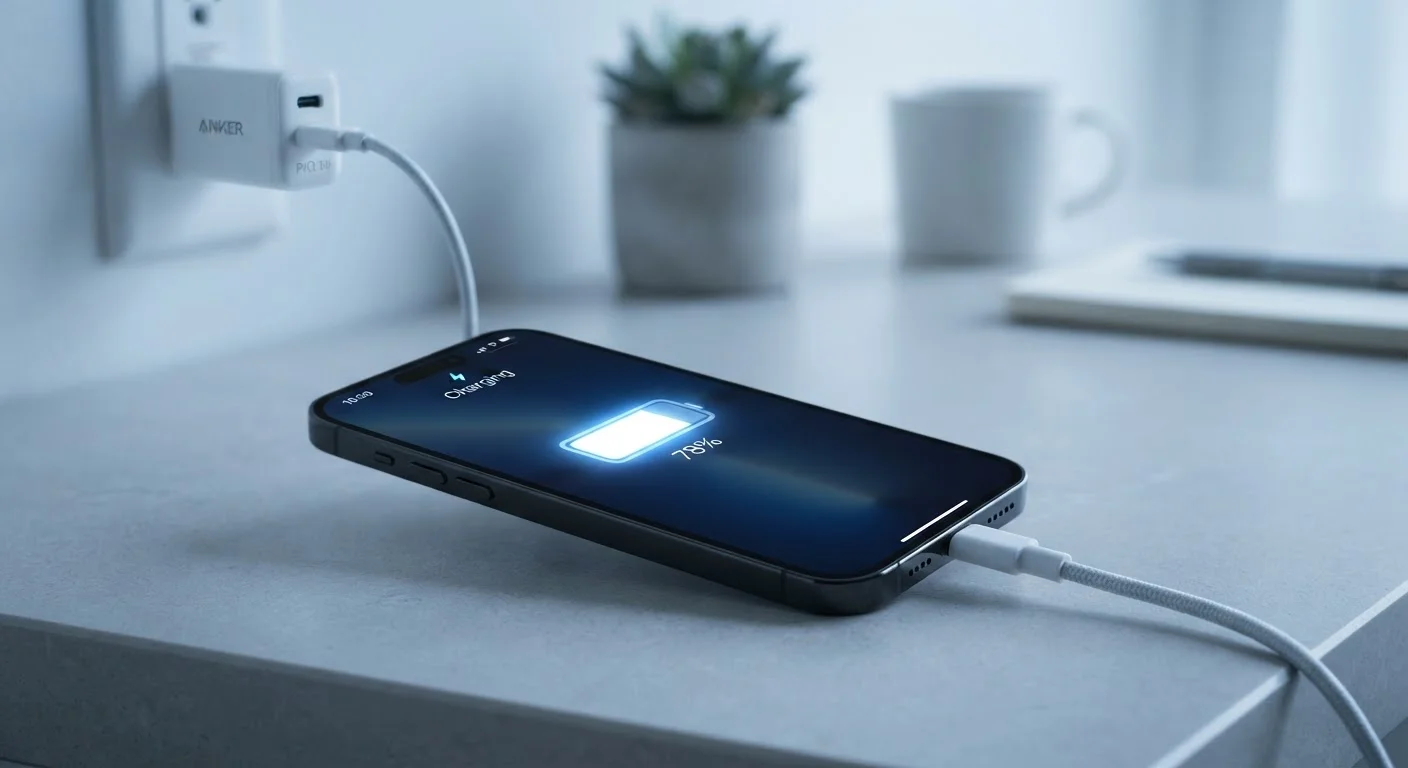
Photo credit: TurboBlogs.net | Explore Blogs At Turbo Speed
In this article
45W, 65W, 120W — charger wattage numbers are everywhere. Here's what they actually mean for charge times and long-term battery health.
Key Takeaways
- Advertised wattage is a ceiling, not a guarantee - actual charging speed depends on the device, cable, and charger all matching protocols.
- Fast charging slows significantly after ~80% charge to protect battery longevity, making 0-to-100 times misleading.
- Using a higher-wattage charger than your device supports is safe but will only deliver what the device requests.
- Repeated fast charging at high temperatures accelerates lithium-ion battery degradation over time.
- Proprietary fast-charging standards (like those from some phone makers) require matching chargers to deliver advertised speeds.
What Wattage Actually Measures
Walk through any electronics aisle and you'll see chargers marketed with bold numbers: 45W, 65W, 120W. Wattage - the product of voltage and current - describes the maximum power a charger can deliver, not what your device will actually draw. That distinction matters enormously.
Charging speed is negotiated in real time between your device, the cable, and the charger. This negotiation happens through protocols such as USB Power Delivery (USB-PD) and various manufacturer-specific standards. If any link in that chain doesn't support the same protocol, the system defaults to a lower, safer power level. A 65W charger plugged into a phone that only accepts 18W will charge at 18W - no faster, no slower.
Cables are frequently the overlooked variable. For a deeper look at how cable specs affect both power and data speeds, see our guide to USB-C and cable standards.
Myth
A higher-wattage charger will charge my phone faster, regardless of what charger it came with.
Fact
Your phone charges only as fast as its own charging controller allows, regardless of the charger's maximum output.
Every smartphone contains a charging management chip that sets a ceiling on incoming power. Connecting a 120W charger to a phone rated for 25W will result in a 25W charge - the extra capacity sits unused. Conversely, using a lower-wattage charger than your device supports will simply slow things down. Neither scenario damages the device, but neither delivers magic speed beyond the hardware's design limits.
Myth
Fast charging will ruin my battery within a year.
Fact
Occasional fast charging has a modest impact on long-term battery health; chronic fast charging at high temperatures is the real risk.
Battery degradation is cumulative and influenced by several factors: heat, charge cycles, and how often you charge to 100%. Fast charging does generate more heat than slow charging, which is why devices reduce current after 80%. Used in moderate ambient temperatures and not exclusively for every charge session, fast charging typically does not cause severe degradation beyond what normal use produces over two to three years.
Myth
Any USB-C charger will fast-charge any USB-C device.
Fact
USB-C is a connector shape, not a charging standard - compatibility depends on supported protocols, not the port shape.
Several manufacturers use proprietary fast-charging technologies - protocols that operate only when both the charger and the device are from the same ecosystem or are certified for that standard. A USB-C charger that uses one vendor's protocol may deliver only standard 5W to a phone expecting a different protocol, even though both devices use identical-looking USB-C ports. Always verify protocol compatibility, not just connector type.
Myth
Charging from 0% to 100% with fast charging takes the time shown in the advertisement.
Fact
Advertised times usually reflect only the fast-charge phase to roughly 80%, not a complete full charge.
Marketing materials frequently cite impressive charge times - "50% in 20 minutes" - that represent only the first, faster phase of charging. The remaining 20% can take an equal or greater amount of time because the device intentionally slows current to protect cell chemistry during the final stage. A complete 0-to-100% charge under real conditions consistently takes longer than headline figures suggest.
Myth
Leaving my phone plugged in overnight with a fast charger will overcharge and damage the battery.
Fact
Modern smartphones automatically stop drawing power at 100% and manage trickle charging through software.
Contemporary device firmware includes overcharge protection that halts active charging once the battery reaches full capacity. Many phones also implement "optimized charging" features that learn overnight charging patterns and intentionally delay the final charge percentage until just before a typical wake time - reducing the time the battery sits at 100%, which is itself a mild stressor for lithium-ion cells. Overnight charging on a reputable charger is generally safe, though charging in extreme heat (such as under a pillow) remains inadvisable.
How Batteries and Charging Curves Shape Real-World Times
Even when a charger and device are perfectly matched, the advertised charge time is rarely the full picture. Lithium-ion batteries charge in two phases. During the first phase - roughly 0% to 80% - the battery accepts the highest current the system allows, and charging is genuinely fast. In the second phase, the charger deliberately reduces current to prevent heat buildup and chemical stress. This is called the constant voltage phase, and it is slower by design.
Manufacturers typically measure their headline charge times only through the fast first phase, or they test at controlled room temperatures under ideal conditions. Real-world charge times, especially when a phone is in use, in a warm car, or inside a case, will be longer.
~80%
Battery level where fast charging slows
Lithium-ion charging protocols universally reduce current above roughly 80% state of charge to limit heat and chemical wear on the battery cell.
20-30%
Typical capacity loss after 500 full charge cycles
Battery capacity estimates from device manufacturers and independent teardown researchers suggest lithium-ion cells often lose this capacity range after several hundred complete charge cycles, varying by temperature and charging habits.
Heat is the core concern. Fast charging generates heat inside the battery cell itself, and sustained high temperatures accelerate the chemical degradation of lithium-ion electrodes. This is why devices throttle charging speed when they detect elevated temperatures - it's a protective behavior, not a malfunction. For practical strategies to preserve your battery over years of use, see how to slow smartphone battery degradation.
Charging in High Heat Is the Bigger Risk
Leaving a phone charging in direct sunlight, inside a hot car, or tightly enclosed in a thick case is more damaging to battery longevity than fast charging itself. Heat accelerates electrolyte breakdown inside the cell in ways that are not reversible. If your device feels unusually warm during charging, remove the case and move it to a cooler surface.

Author
Tech & Electronics Editorial Team
Tech & Electronics Editorial Team is the collective byline for our editorial team and contributor network. Articles published under this byline or an editorial pen name are researched, written, and reviewed according to our editorial standards for clarity, consistency, and independence before publication.
View all articles →