
Free Weights vs. Resistance Machines: Choosing the Right Tool for Your Goals
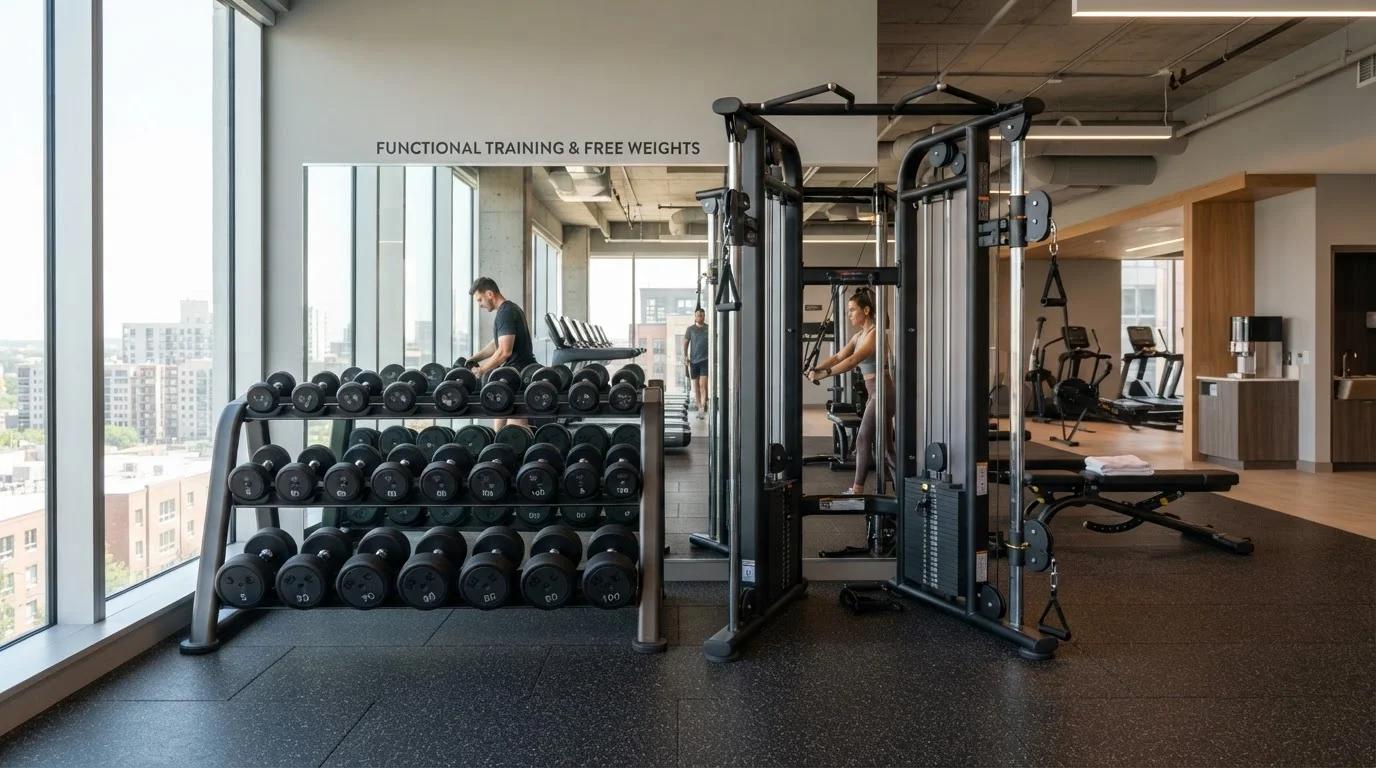
Photo credit: TurboBlogs.net | Explore Blogs At Turbo Speed
In this article
Both free weights and machines build strength, but they work differently. Learn the trade-offs to figure out which fits your training stage and goals.
Key Takeaways
- Free weights engage stabilizer muscles and build functional strength across multiple joints.
- Resistance machines reduce injury risk for beginners by guiding movement through a fixed path.
- Neither tool is universally superior - your training stage, goals, and any injury history should drive the choice.
- Combining both approaches is a common and well-supported strategy for comprehensive strength development.
- Consult a qualified fitness professional or physical therapist before starting any new strength program, especially if you have existing injuries.
How Each Tool Actually Works
Free weights - including dumbbells, barbells, and kettlebells - require your body to control the load through three-dimensional space. Every rep demands input from stabilizer muscles: the smaller muscles that coordinate joint position and balance. This is why a dumbbell chest press, for example, activates the shoulder rotators and core alongside the primary chest muscles.
Resistance machines, by contrast, move along a fixed track or cable path. The machine absorbs much of the stabilization work, directing force through a predetermined range of motion. This isn't a flaw - it's a design feature that makes machines genuinely useful for learning a movement, targeting one muscle group precisely, or training through fatigue without a spotter.
Understanding this mechanical difference is the foundation for choosing intelligently. For a broader look at what strength training does for your body physiologically, see our guide to strength training vs. cardio.
| Criterion | Free Weights | Resistance Machines |
|---|---|---|
| Stabilizer muscle activation | High - requires full-body coordination | Low - machine absorbs stabilization |
| Learning curve | Steeper - technique is critical | Shallow - guided movement path |
| Injury risk (with poor form) | Higher if form breaks down | Lower due to fixed range of motion |
| Muscle isolation | Moderate - compound emphasis | High - designed for targeted loading |
| Functional movement carry-over | Strong - mimics real-world patterns | Limited - movement is constrained |
| Cost and space requirements | Low to moderate - scalable setup | High - requires significant space and budget |
| Suitability for beginners | Requires coaching to start safely | Well-suited with minimal instruction |
| Exercise variety | Very high - hundreds of movements | Limited to machine's design |
The Real Trade-Offs: Safety, Skill, and Specificity
The most common concern with free weights is injury risk - and it's not unfounded. Improper technique under heavy load places stress on joints and connective tissue. However, research generally shows that free weight injuries are associated with poor form or excessive load progression, not the tools themselves. With appropriate coaching and gradual progression, free weights are safe for most healthy adults.
Machines reduce the technical barrier to entry significantly. A beginner can sit down at a leg press, set the weight, and perform the movement with relatively low risk of serious error. This accessibility makes machines especially valuable for older adults who are new to strength work - a topic explored in our article on fitness for adults over 50.
~58%
Adults who strength train at least once weekly
According to the CDC's National Health Interview Survey, fewer than 3 in 5 American adults meet guidelines for muscle-strengthening activity, underscoring how much room exists for any tool that lowers the barrier to entry.
2x/week
Minimum frequency recommended for muscle strength
The U.S. Department of Health and Human Services Physical Activity Guidelines recommend muscle-strengthening activity involving all major muscle groups at least two days per week for adults.
Specificity matters too. If your goal is hypertrophy (muscle growth) in a particular muscle - say, isolating the biceps without taxing the lower back - a machine curl delivers that precisely. If your goal is improving how you move through daily life - lifting, carrying, climbing stairs - free weights train the integrated patterns those tasks demand.
It's also worth dispensing with one persistent myth: that machines are strictly a beginner tool and free weights are only for serious lifters. Many elite athletes and physical therapists incorporate machines intentionally and strategically. For more on evidence versus gym folklore, see our piece on fitness myths the evidence has debunked.
Practical Considerations: Access, Cost, and Setting
Access is a real-world factor. Resistance machines are large, expensive, and almost exclusively found in commercial gyms. A full cable and selectorized machine setup can cost tens of thousands of dollars - making home use impractical for most people. Free weights, by contrast, scale from a single pair of adjustable dumbbells to a full barbell and rack setup, and can reasonably fit into a garage or spare room.
If you're weighing whether a gym membership or home setup makes more sense for your lifestyle overall, our home workouts vs. gym workouts comparison covers the full picture - including cost, motivation, and effectiveness.
Space and time constraints matter as well. A single barbell and a set of plates or adjustable dumbbells can replicate the function of a dozen machines. For people with limited gym access - or those drawn to low-impact strength options - free weights offer the most flexible path forward.
This article is for general informational purposes only and does not constitute medical or fitness advice. Consult a qualified healthcare provider or certified fitness professional before beginning any new exercise program, particularly if you have existing health conditions or injuries.

Author
Health & Wellness Editorial Team
Health & Wellness Editorial Team is the collective byline for our editorial team and contributor network. Articles published under this byline or an editorial pen name are researched, written, and reviewed according to our editorial standards for clarity, consistency, and independence before publication.
View all articles →