
Gutters Are Doing More Work Than You Realize
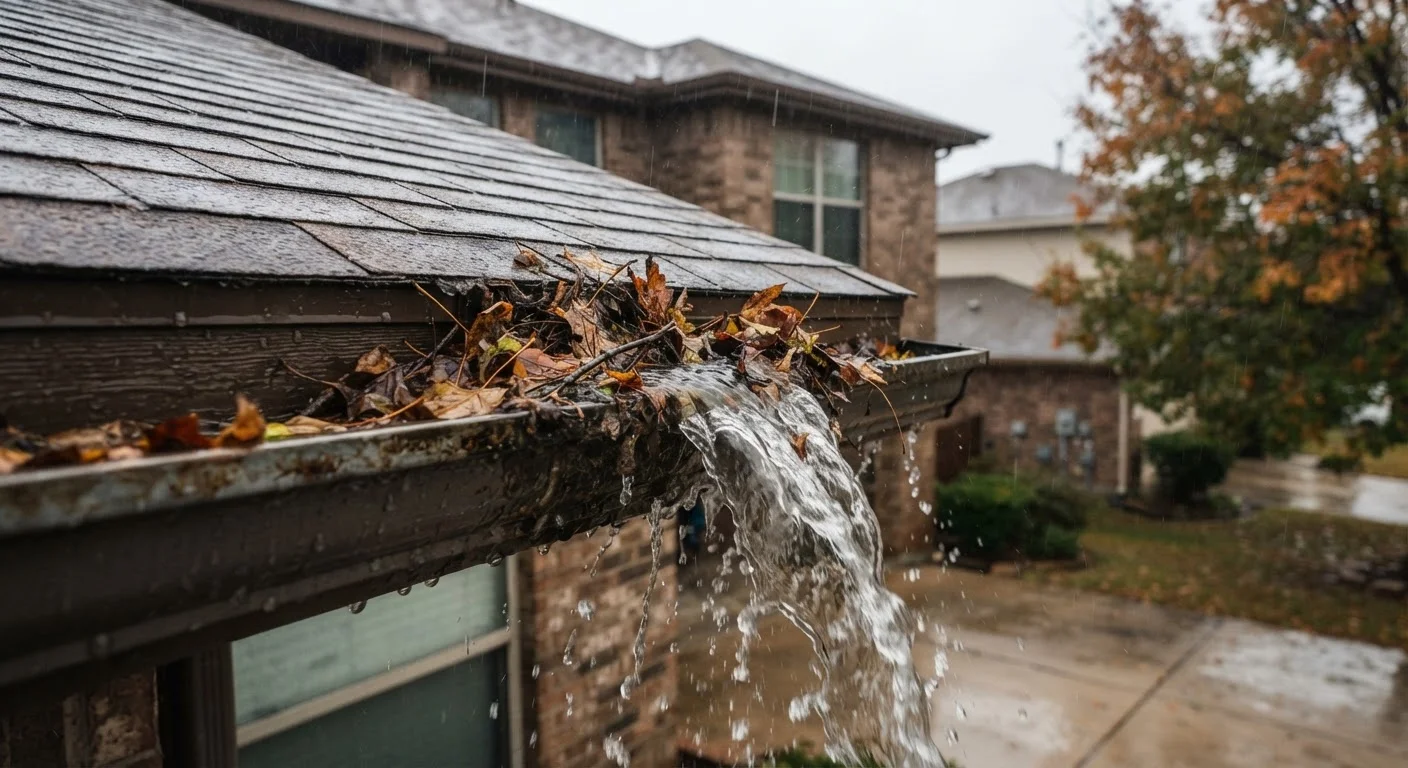
Photo credit: TurboBlogs.net | Explore Blogs At Turbo Speed
In this article
Gutters protect your foundation, siding, and roof. Understand how the system works and what happens when it fails to drain properly.
Key Takeaways
- Gutters protect foundations, siding, landscaping, and interior spaces from water intrusion.
- Clogged or damaged gutters are a leading cause of preventable home water damage.
- Most gutters should be cleaned at least twice a year - in fall and spring.
- Downspout extensions should discharge water at least four to six feet from the foundation.
- Signs of gutter failure include peeling paint, basement dampness, soil erosion, and sagging channels.
The Job Gutters Actually Do
Most homeowners think of gutters as a minor cosmetic feature - the metal trim along the roofline. In reality, the gutter system is a water management infrastructure that protects nearly every major component of the home simultaneously.
When rain falls on a roof, it doesn't distribute evenly. Water accelerates down the slope and dumps off the edge at high volume. Without gutters, that concentrated runoff hammers the soil directly below the roofline, erodes landscaping, and splashes debris back onto siding. More critically, it saturates the ground near the foundation - and persistent soil saturation is one of the primary contributors to foundation settlement, basement seepage, and crawl space moisture problems.
A properly functioning gutter system intercepts that water at the roofline, carries it horizontally along the trough to a downspout, and discharges it several feet away from the home where it can disperse harmlessly. It's a deceptively simple concept with serious structural consequences when it breaks down.
$4,000-$10,000+
Typical foundation repair cost range
According to home improvement cost databases, foundation repairs driven by water intrusion - often worsened by improper drainage - frequently run into the thousands before structural fixes are included.
2x/year
Minimum recommended gutter cleaning frequency
Most roofing and home maintenance authorities recommend cleaning gutters at least twice annually, with additional cleanings for homes under heavy tree coverage.
4-6 feet
Minimum downspout discharge distance from foundation
Standard guidance from drainage and foundation specialists holds that downspouts should extend water at least four to six feet away from the home's perimeter.
What Failure Looks Like - and Where It Starts
Gutter failure almost always begins with accumulation. Leaves, seed pods, shingle granules, and roof grit collect in the trough over time. Once debris forms a dam, standing water has nowhere to go except over the edge or backward under the roofing material.
Overflow along the front edge soaks the fascia board - the wood trim the gutter is mounted to - causing rot that can spread to the soffit and eventually the roof deck. Water backing up under shingles accelerates the conditions that lead to interior leaks. This is why gutters and roofing are closely linked systems; see our beginner's guide to roof maintenance for a breakdown of how these components interact.
Common visible warning signs of gutter problems include:
- Paint peeling on siding or fascia directly below the gutter line
- Staining or mildew streaks running down exterior walls
- Soil erosion channels in landscaping below the roofline
- Sagging or pulling gutters that have separated from the fascia
- Basement dampness following heavy rain
The challenge is that many of these signs appear well after damage has already begun. Staying ahead of the problem through routine inspection is far less expensive than remediation. As we detail in why deferred maintenance costs more than you think, small neglected systems compound into large repair bills.
Inspect After Every Major Storm
High winds and heavy rain can shift downspout elbows, pull gutter hangers loose, and deposit large debris in channels even mid-season. A quick visual check from the ground after significant weather can catch problems before they have time to cause damage.
Downspouts: The Overlooked Half of the System
The gutter trough gets most of the attention, but downspouts and their discharge points are equally critical. A clean, intact gutter that empties water six inches from the foundation delivers most of the same risk as a clogged one. Water simply collects at a different point.
Downspouts should terminate with an extension - rigid or flexible - that carries water at least four to six feet from the home's perimeter. On properties with grading that slopes away from the foundation, this may be sufficient. On flat lots or those with clay-heavy soil that drains slowly, underground drain pipes or French drains routed to a street or dry well may be necessary.
It's also worth checking that downspouts are not discharging into window wells, against retaining walls, or onto neighboring property - each creates a secondary water problem.
Underground Drain Systems Require Professional Assessment
If your property's grading or soil type means surface-level downspout extensions aren't sufficient, underground drainage solutions - such as French drains or pop-up emitters - may be needed. These involve excavation and connection to drainage infrastructure and should be designed and installed by a qualified landscape drainage contractor. Permits may be required depending on your municipality.
Building Gutter Maintenance Into Your Routine
Gutter maintenance is not complicated, but it does require consistency. At minimum, most homes need cleaning twice a year: once in late fall after deciduous trees have dropped their leaves, and once in early spring to clear winter debris and check for freeze-thaw damage.
During each cleaning, it's worth inspecting the entire system: check that brackets are secure, end caps are sealed, joints are not separating, and downspout elbows are intact. Small gaps at seams are easy to reseal with gutter sealant; a sagging section often just needs a new hanger bracket.
Gutter maintenance fits naturally into a broader seasonal home maintenance plan. Our guide on building a home maintenance schedule explains how to organize these tasks by season and priority so nothing is overlooked. The principle is consistent with how deferred automotive maintenance compounds - detailed in why skipping routine maintenance costs more than the service itself. Small, regular attention is almost always cheaper than reactive repair.
For ladder-based cleaning, always follow safe practices: use a stable, properly rated ladder, have a second person present, and never lean over or reach beyond your center of balance. Work requiring access to steep or high rooflines is best left to a licensed professional.
Frequently Asked Questions

Author
Home & Real Estate Editorial Team
Home & Real Estate Editorial Team is the collective byline for our editorial team and contributor network. Articles published under this byline or an editorial pen name are researched, written, and reviewed according to our editorial standards for clarity, consistency, and independence before publication.
View all articles →