
Dress Codes Decoded: Casual, Business Casual, Smart Casual, and Formal
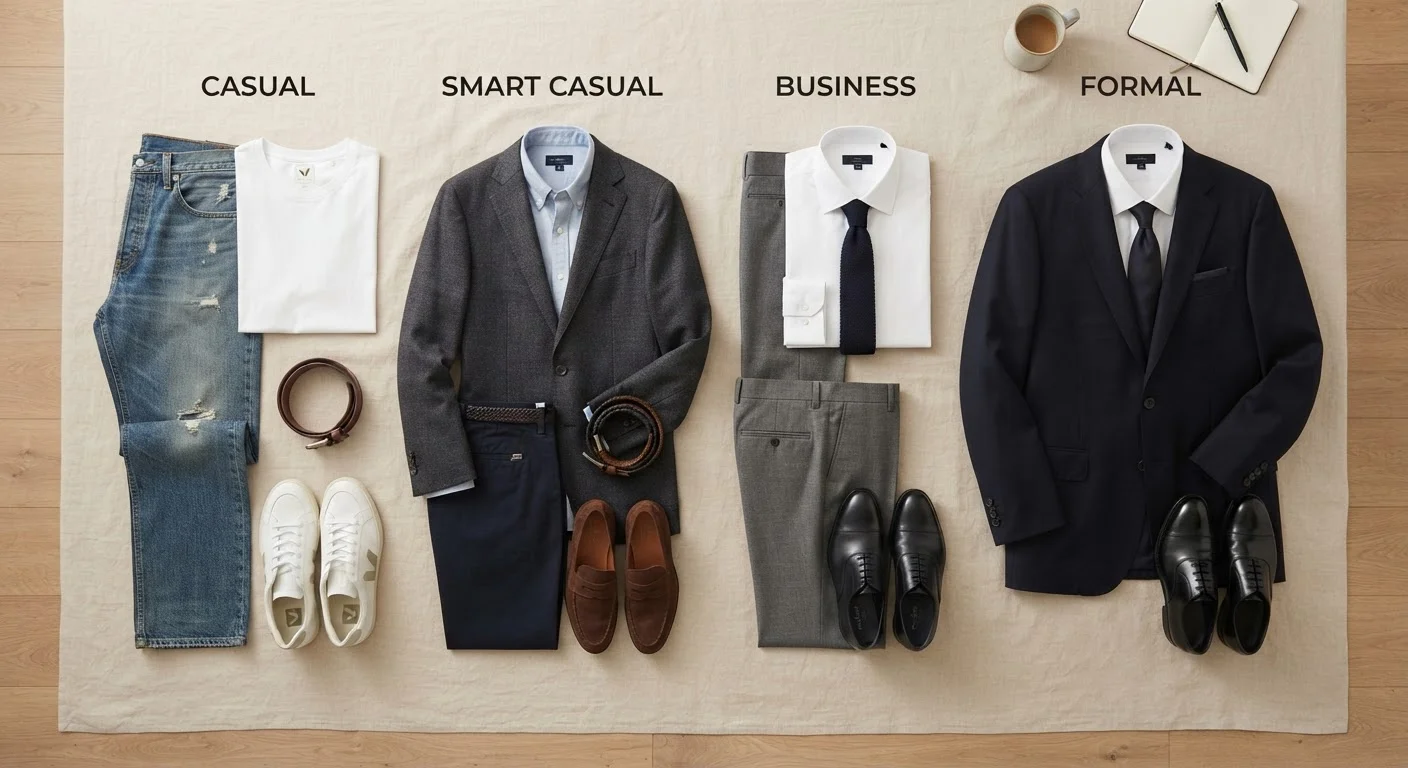
Photo credit: TurboBlogs.net | Explore Blogs At Turbo Speed
In this article
A clear reference guide to American dress code terminology—what each label means, and how to interpret it for real-world situations.
Why Dress Codes Still Matter
An ambiguous invitation - "smart casual attire requested" - can send even confident dressers into a spiral. American dress codes have evolved significantly over the past two decades, blending old formality rules with modern flexibility. Yet the underlying logic remains useful: dress codes signal the tone of an event and help attendees feel appropriately included.
This guide breaks down the four most common dress code labels you'll encounter - casual, business casual, smart casual, and formal - so you can interpret any invitation with clarity. Whether you're attending a job interview, a wedding, or a weekend brunch, knowing the vocabulary is half the battle. See our wardrobe essentials guide for the foundational pieces that make navigating every code much easier.
| Most misread dress code | Business Casual |
| Rarest formal code | White Tie |
| Safest default move | Dress one level above your guess |
| Biggest casual mistake | Confusing comfortable with sloppy |
| Smart casual key rule | One intentional upgrade over casual |
The Four Dress Codes, Defined
Casual
Casual dress means comfortable, everyday clothing - but not sloppy. Think clean jeans or chinos, T-shirts, sneakers, and relaxed tops. The key word is intentional: casual doesn't mean grabbing whatever's on the floor. Stained, torn, or overly wrinkled items cross the line even at casual events. Casual is typical for weekend gatherings, informal parties, and most everyday errands.
Business Casual
Business casual sits between formal office wear and everyday casual - and it's the code most Americans misread. The general framework: slacks or neat chinos, a collared shirt or blouse, and closed-toe shoes. A blazer adds polish but usually isn't required. Jeans, if worn, should be dark-wash and without distressing. Athletic wear, flip-flops, and graphic tees typically fall outside business casual, even at relaxed workplaces.
Smart Casual
Smart casual is the trickiest code because it blends elevated comfort with a polished edge. Think of it as casual clothing with one deliberate upgrade - a structured blazer over a simple tee, loafers instead of sneakers, or tailored trousers with a knit top. The goal is looking put-together without appearing overdressed. Smart casual frequently appears on invitations for date nights, gallery openings, and upscale-casual restaurants.
Formal / Black Tie
Formal dress codes signal a high-ceremony environment. Standard formal (sometimes called black tie) calls for a tuxedo or dark suit for men and a floor-length gown, formal separates, or a sophisticated cocktail dress for women. White tie - the rarest and most formal - requires tailcoats and full-length gowns. When an invitation reads simply "formal," a well-fitted dark suit paired with a dress shirt and tie is generally appropriate and widely accepted.
Casual
Everyday, relaxed clothing worn for informal settings. Should still be clean, intentional, and free of damage or excessive wrinkles.
Business Casual
A semi-formal office-adjacent standard combining neat trousers or chinos, collared shirts or blouses, and closed-toe shoes. Athletic wear is excluded.
Smart Casual
A polished blend of casual comfort and elevated styling - typically casual items paired with one structured or refined piece, such as a blazer or loafers.
Black Tie
A formal dress code requiring tuxedos for men and floor-length gowns or formal separates for women. Common at galas, formal weddings, and award ceremonies.
White Tie
The most formal American dress code, requiring tailcoats for men and full-length formal gowns for women. Reserved for very high-ceremony events.
Cocktail Attire
A semi-formal code that falls between business casual and black tie - typically knee-length to midi dresses or a dark suit, appropriate for evening receptions.
Practical Tips for Interpreting Any Dress Code
When in doubt, lean one notch above what you think is required - it's almost always easier to remove a blazer than to wish you'd brought one. A few additional principles:
- Read the venue: A rooftop cocktail party and a hotel ballroom both say "semi-formal," but they invite different interpretations. Context matters.
- Ask the host: There's no shame in a quick message asking what "smart casual" means for their specific event. Hosts appreciate guests who care.
- Fit is everything: A well-fitted outfit at any price point looks more polished than expensive clothes that don't fit properly.
- Grooming counts: Clean, neat presentation - hair, shoes, and overall tidiness - signals effort regardless of dress code level.
Building a small, versatile wardrobe makes all of this much simpler. Our guide on dressing for any occasion with a small wardrobe covers practical outfit-building strategies that stretch across every code. And if you're still figuring out your personal aesthetic, Personal Style From Scratch is a gentle starting point.
A Note on Gender-Neutral Dressing
Traditional dress codes were written with a binary gender framework in mind, but modern interpretations are increasingly flexible. The underlying intent of each code - level of formality, context-appropriate polish - applies regardless of the garments chosen. When evaluating your outfit, focus on the formality level and fit rather than gendered clothing categories. When uncertain about a specific event's expectations, asking the host directly is always a reasonable and welcome step.

Author
Lifestyle & Shopping Editorial Team
Lifestyle & Shopping Editorial Team is the collective byline for our editorial team and contributor network. Articles published under this byline or an editorial pen name are researched, written, and reviewed according to our editorial standards for clarity, consistency, and independence before publication.
View all articles →