
Wired Earbuds vs. True Wireless: What You're Actually Trading Off
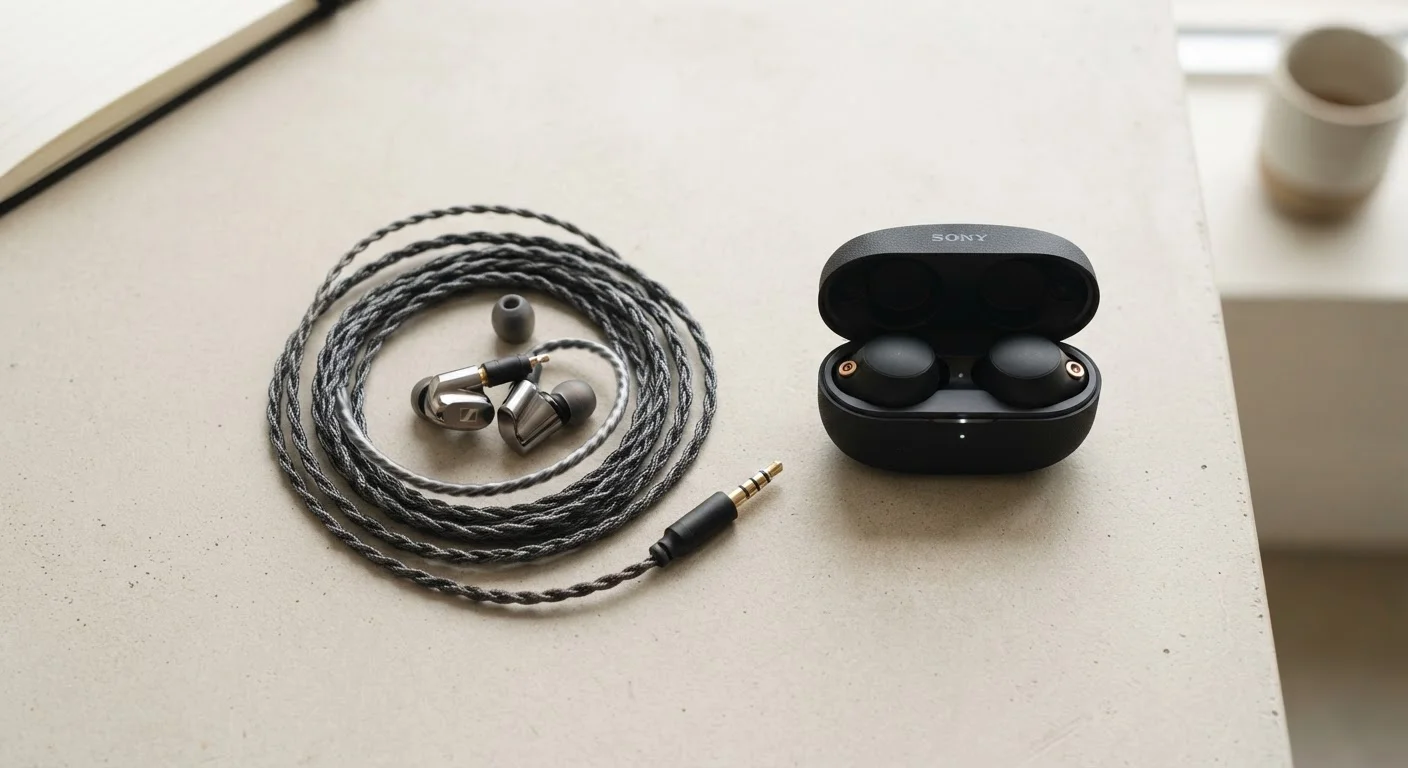
Photo credit: TurboBlogs.net | Explore Blogs At Turbo Speed
In this article
Sound quality, latency, battery life, and cost — a clear-eyed look at what separates wired earbuds from true wireless models.
Key Takeaways
- Wired earbuds deliver zero latency and consistent audio without any battery dependency.
- True wireless earbuds offer genuine cable-free freedom but require regular charging and introduce connection variables.
- Sound quality gaps between the two formats have narrowed significantly, though wired still holds a technical edge at lower price points.
- True wireless earbuds cost more on average for comparable audio performance relative to wired alternatives.
- Your use case — commuting, gaming, studio monitoring, workouts — should drive the format decision.
The Core Difference: What the Wire Actually Does
The cable connecting wired earbuds to a device isn't just a physical inconvenience — it's an analog signal path. Audio travels from your device as an electrical signal directly to the driver in the earbud, with minimal processing in between. That simplicity has real implications for audio fidelity and reliability.
True wireless earbuds (often abbreviated TWS) replace that cable with a Bluetooth radio. Audio is encoded, transmitted wirelessly, decoded in the earbud, and converted to sound — all in milliseconds. The technology has matured considerably, but the chain of conversion steps remains longer than a wired connection by design.
This distinction underlies nearly every trade-off between the two formats, from latency to battery life to price. For a broader look at how wireless signals behave in your environment, see our guide to home Wi-Fi and wireless signals.
| Criterion | Wired Earbuds | True Wireless Earbuds |
|---|---|---|
| Audio latency | Near-zero | 20ms–100ms+ (codec-dependent) |
| Battery required | None | Yes — earbuds + case |
| Sound quality per dollar | Higher at equivalent price | Lower at equivalent price |
| Cable / tangle risk | Yes | None |
| Active noise cancellation | Rare | Widely available |
| Device jack requirement | 3.5mm or USB-C port | None |
| Typical price range | $10–$100+ | $30–$300+ |
| Risk of losing a piece | Low | Higher (individual earbuds) |
Sound Quality: Closer Than You'd Think, But Not Equal
The audio quality gap between wired and true wireless has narrowed meaningfully over the past several years. Modern Bluetooth codecs — such as aptX, AAC, and LDAC — transmit compressed audio at high enough bitrates that most listeners cannot reliably detect a difference in a blind test under normal listening conditions.
That said, wired earbuds still hold a genuine technical advantage at equivalent price points. Because manufacturers don't need to budget for Bluetooth chips, battery cells, or charging cases, more of the cost goes toward the acoustic driver and housing. The result is that a $40 wired earbud often competes sonically with a $80–$100 true wireless alternative.
~20ms
Minimum Bluetooth audio latency
Modern aptX Low Latency codec targets approximately 20ms; standard SBC Bluetooth can exceed 100ms depending on hardware.
4–8 hrs
Typical TWS playback per charge
Most true wireless earbuds offer four to eight hours of earbud playback, with charging cases providing one to three additional full charges.
50%+
Smartphones now shipped without 3.5mm jack
Industry analyst data indicates that the majority of flagship smartphones shipped globally have dropped the traditional headphone jack, accelerating TWS adoption.
The exception is at the premium end of the market, where high-end true wireless earbuds with flagship codecs and well-tuned drivers can match or surpass many wired options in perceived audio quality — though at a significantly higher cost.
Latency, Battery, and Practical Durability
Latency is where wired earbuds hold an unambiguous lead. A wired connection introduces effectively zero perceptible delay between audio output and what you hear. True wireless earbuds introduce Bluetooth latency — typically ranging from around 20ms to over 100ms depending on the codec and device pairing. For music and podcasts, this is rarely noticeable. For video playback or gaming, it can cause detectable lip-sync issues.
Battery dependency is the most significant practical limitation of true wireless earbuds. Earbuds themselves typically offer four to eight hours of playback per charge, with a charging case providing additional top-ups. Forgetting to charge means no audio at all — a failure mode that simply doesn't apply to wired earbuds.
Durability considerations differ between formats as well. Wired earbuds are vulnerable to cable damage — the point where the cable meets the jack is a common failure point. True wireless earbuds eliminate cable wear but introduce new durability variables: battery degradation over charge cycles, and the risk of losing one earbud entirely. Neither format is inherently more durable; the failure modes are just different.
Bluetooth Codec Compatibility Matters
Not all Bluetooth codecs are supported by all devices. A true wireless earbud advertising aptX or LDAC will only use those higher-quality codecs when paired with a device that also supports them — otherwise both devices fall back to the baseline SBC codec. Before assuming premium wireless audio quality, verify codec compatibility between your earbuds and your specific phone or source device.
Which Format Actually Fits Your Life?
The right format depends on how and where you actually listen. Wired earbuds are objectively simpler: plug in and play. They're also the stronger choice for any audio-critical workflow — video editing, music production monitoring, or gaming where sync precision matters. The analog path also means sound output is consistent regardless of wireless interference or Bluetooth congestion, which can be a real factor in crowded environments like public transit or busy offices. Wireless signal crowding in public spaces is worth understanding if you rely heavily on Bluetooth devices.
True wireless earbuds make the most sense for movement-heavy use: workouts, commutes, or any situation where a trailing cable creates a practical problem. Features like active noise cancellation (ANC), transparency mode, and on-ear controls are also far more common in the true wireless category, since the additional electronics are already present.
Budget-minded listeners often find wired earbuds deliver more acoustic value per dollar. If you're weighing these trade-offs alongside broader spending decisions, our look at the real trade-offs of tight budgeting offers useful framing for evaluating purchases like this. Similarly, the wired-versus-wireless question extends beyond earbuds — if you're building out a smart home, see our breakdown of wired vs. wireless smart home devices for parallel considerations.

Author
Tech & Electronics Editorial Team
Tech & Electronics Editorial Team is the collective byline for our editorial team and contributor network. Articles published under this byline or an editorial pen name are researched, written, and reviewed according to our editorial standards for clarity, consistency, and independence before publication.
View all articles →