
Keeping a Car Long-Term: The Financial and Practical Case for High-Mileage Ownership
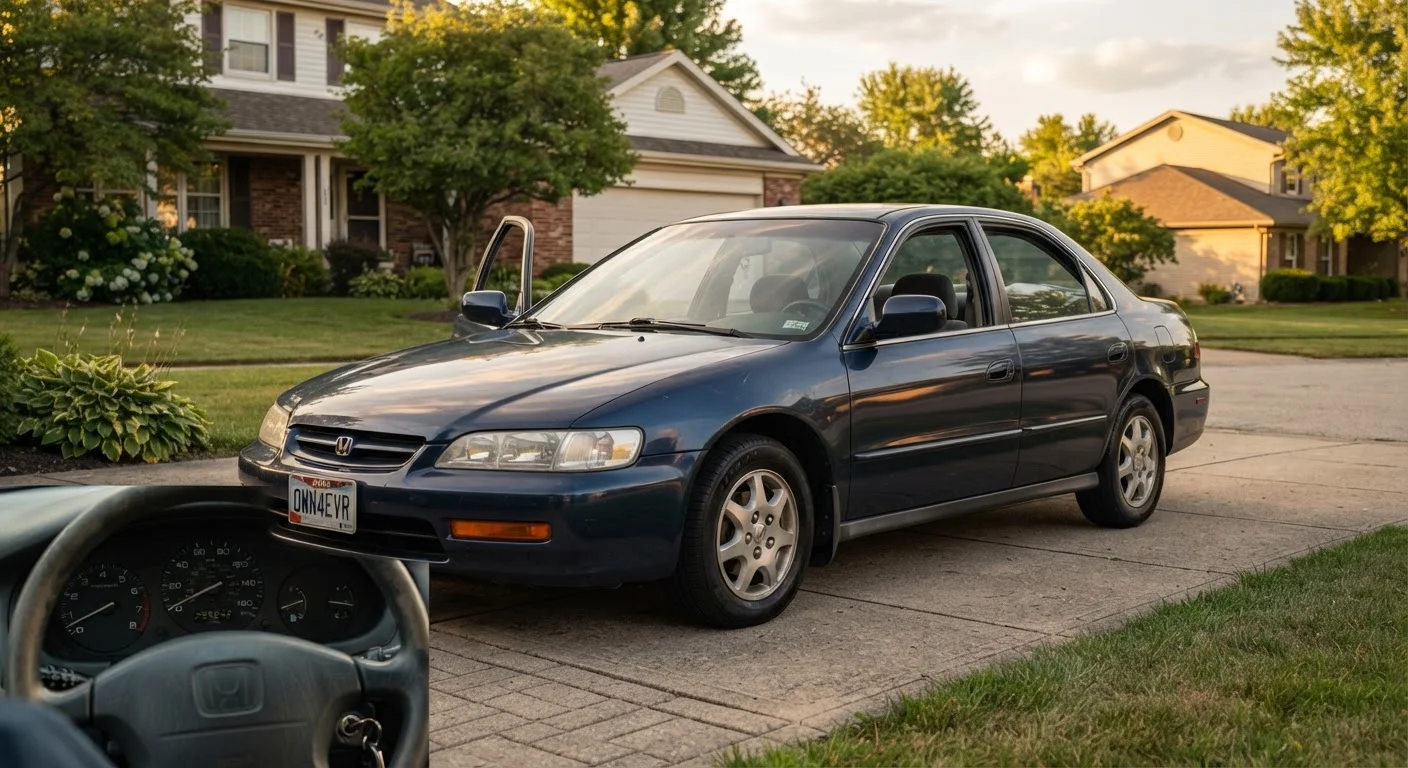
Photo credit: TurboBlogs.net | Explore Blogs At Turbo Speed
In this article
Explore the advantages and real challenges of driving a vehicle well past 100,000 miles rather than trading up.
Key Takeaways
- Eliminating a monthly car payment is often the biggest financial benefit of long-term ownership.
- High-mileage vehicles demand more proactive maintenance to avoid costly repairs.
- Depreciation slows significantly after 100,000 miles, changing the ownership cost equation.
- Reliability varies by make, model, and maintenance history - not mileage alone.
- Insurance costs generally decline as a vehicle ages and loses market value.
No monthly car payment frees up cash flow
Once a loan is paid off, the absence of a monthly payment can free up hundreds of dollars each month. For many households, this represents the single largest ongoing financial benefit of long-term ownership.
Depreciation curve flattens after 100,000 miles
A vehicle that has already absorbed its steepest value losses costs far less on a per-year depreciation basis than a newer replacement would during its first few years of ownership.
Insurance premiums typically decrease with age
As a vehicle's market value drops, comprehensive and collision coverage costs tend to fall in parallel. Some owners of paid-off older vehicles also reassess whether carrying full coverage remains cost-effective.
Familiarity reduces ownership friction
Knowing your vehicle's quirks, service history, and typical behavior makes maintenance planning more predictable and can help a trusted mechanic diagnose issues more efficiently.
Avoid repeat financing costs and fees
Trading up frequently means repeatedly incurring loan origination fees, sales tax, registration costs, and dealer fees - expenses that quietly add thousands to the total cost of ownership over a decade.
Repair costs become less predictable over time
Aging components - timing belts, water pumps, suspension parts, and seals - wear at different rates, making large, unexpected repair bills more likely as mileage climbs.
Older vehicles lack modern safety technology
Features like automatic emergency braking, lane-keeping assist, and blind-spot monitoring have become standard on newer vehicles. Older models typically lack these systems, which have demonstrated measurable safety benefits.
Fuel economy may lag current standards
Engines lose efficiency as components wear, and older vehicle designs generally return lower fuel economy than current equivalents, adding ongoing cost at the pump.
Parts availability can become a challenge
For older or less common models, sourcing replacement parts - especially non-generic components - can mean longer shop wait times and higher costs as aftermarket supply thins out.
Reliability uncertainty grows with age
Even well-maintained vehicles carry increasing mechanical risk as they age. A single major failure - transmission, engine, or electrical system - can make continued ownership financially impractical.
Why High-Mileage Ownership Is Worth Reconsidering
The conventional wisdom that a car becomes a liability once it crosses 100,000 miles has quietly lost its grip. Advances in manufacturing, metallurgy, and engine design mean that many modern vehicles - properly maintained - are capable of reaching 200,000 miles or more before requiring major drivetrain work. Yet the cultural pull toward trading in for something newer remains strong, often driven more by habit and marketing than by a clear-eyed look at the numbers.
The decision to keep a vehicle long-term sits squarely within the broader question of what a car actually costs you. Total ownership costs - including depreciation, financing, insurance, and maintenance - tell a more complete story than the sticker price of a replacement ever will.
No monthly car payment frees up cash flow
Once a loan is paid off, the absence of a monthly payment can free up hundreds of dollars each month. For many households, this represents the single largest ongoing financial benefit of long-term ownership.
Depreciation curve flattens after 100,000 miles
A vehicle that has already absorbed its steepest value losses costs far less on a per-year depreciation basis than a newer replacement would during its first few years of ownership.
Insurance premiums typically decrease with age
As a vehicle's market value drops, comprehensive and collision coverage costs tend to fall in parallel. Some owners of paid-off older vehicles also reassess whether carrying full coverage remains cost-effective.
Familiarity reduces ownership friction
Knowing your vehicle's quirks, service history, and typical behavior makes maintenance planning more predictable and can help a trusted mechanic diagnose issues more efficiently.
Avoid repeat financing costs and fees
Trading up frequently means repeatedly incurring loan origination fees, sales tax, registration costs, and dealer fees - expenses that quietly add thousands to the total cost of ownership over a decade.
The Real Challenges of Keeping an Older Vehicle
High-mileage ownership is not without friction. Components wear, technology ages, and repair bills can be unpredictable. Understanding these challenges ahead of time is what separates drivers who thrive with older vehicles from those who end up stranded - financially and literally.
Repair costs become less predictable over time
Aging components - timing belts, water pumps, suspension parts, and seals - wear at different rates, making large, unexpected repair bills more likely as mileage climbs.
Older vehicles lack modern safety technology
Features like automatic emergency braking, lane-keeping assist, and blind-spot monitoring have become standard on newer vehicles. Older models typically lack these systems, which have demonstrated measurable safety benefits.
Fuel economy may lag current standards
Engines lose efficiency as components wear, and older vehicle designs generally return lower fuel economy than current equivalents, adding ongoing cost at the pump.
Parts availability can become a challenge
For older or less common models, sourcing replacement parts - especially non-generic components - can mean longer shop wait times and higher costs as aftermarket supply thins out.
Reliability uncertainty grows with age
Even well-maintained vehicles carry increasing mechanical risk as they age. A single major failure - transmission, engine, or electrical system - can make continued ownership financially impractical.
A proactive car maintenance schedule is the single most effective tool for managing these risks. Owners who track service intervals, address small issues early, and build a repair fund are far better positioned than those who react only when something breaks.
The Depreciation Advantage and What It Means for You
New vehicles typically lose between 15% and 25% of their value in the first year alone, with the steepest depreciation occurring in years one through five. By the time a vehicle reaches 100,000 miles, much of that value erosion has already occurred - meaning the original owner (or a subsequent one who bought used) faces a much flatter depreciation curve going forward.
~20%
Average first-year depreciation for new vehicles
Industry data consistently shows new vehicles lose a significant share of their value within the first 12 months, a loss that slows considerably in later years.
200,000+
Miles many modern vehicles can reach with proper care
Automotive engineering improvements over the past two decades have extended the practical lifespan of many mainstream vehicles well beyond historical expectations.
~$700
Average monthly new vehicle payment in recent years
Federal Reserve and industry survey data have tracked new vehicle monthly payments rising steadily, underscoring the cash-flow value of eliminating a car loan.
This shift changes the financial logic of ownership significantly. Understanding how depreciation works helps owners recognize that holding a well-maintained vehicle at this stage often costs less per year than acquiring a newer model that will immediately begin its own steep decline in value.
For drivers weighing the lease-versus-own question, the depreciation math is equally relevant. Leasing versus owning involves distinct trade-offs around equity, mileage, and flexibility - all of which interact with how long you plan to keep a vehicle.
Insurance Coverage Worth Reviewing at High Mileage
As a vehicle's market value declines, the cost-benefit calculation for comprehensive and collision coverage shifts. If annual premiums for those coverages approach or exceed a meaningful percentage of the vehicle's actual cash value, some owners choose to reduce coverage. This is a general consideration, not a recommendation - coverage decisions depend on your financial situation, local requirements, and lender obligations. A licensed insurance agent can help you evaluate your specific policy.
Making the Decision: When to Hold and When to Let Go
No formula perfectly predicts when a repair bill tips the balance toward replacement. A useful general benchmark - though not a universal rule - is to compare the cost of a repair against the vehicle's current market value and remaining projected reliability. If repair costs are approaching or exceeding the vehicle's value, and failure rates are increasing, the calculus often shifts toward replacement.
Equally important is being honest about maintenance history. A 120,000-mile vehicle with complete service records and no deferred maintenance is a fundamentally different proposition than one with gaps. Deferred maintenance compounds over time, turning small oversights into expensive failures that can make an otherwise viable vehicle uneconomical to keep.
Drivers comparing this path to buying new should also consult a broader framework. New car versus used car trade-offs extend well beyond price, touching reliability expectations, warranty coverage, and financing realities that affect monthly cash flow. The full picture of long-term ownership is covered in our complete car ownership guide.
This article is for general informational purposes only and does not constitute financial or mechanical advice. Consult a qualified mechanic for vehicle-specific assessments and a licensed financial adviser for decisions affecting your personal budget.

Author
Autos & Insurance Editorial Team
Autos & Insurance Editorial Team is the collective byline for our editorial team and contributor network. Articles published under this byline or an editorial pen name are researched, written, and reviewed according to our editorial standards for clarity, consistency, and independence before publication.
View all articles →