
What 'Sale' Actually Means (And When It Doesn't Mean Much at All)
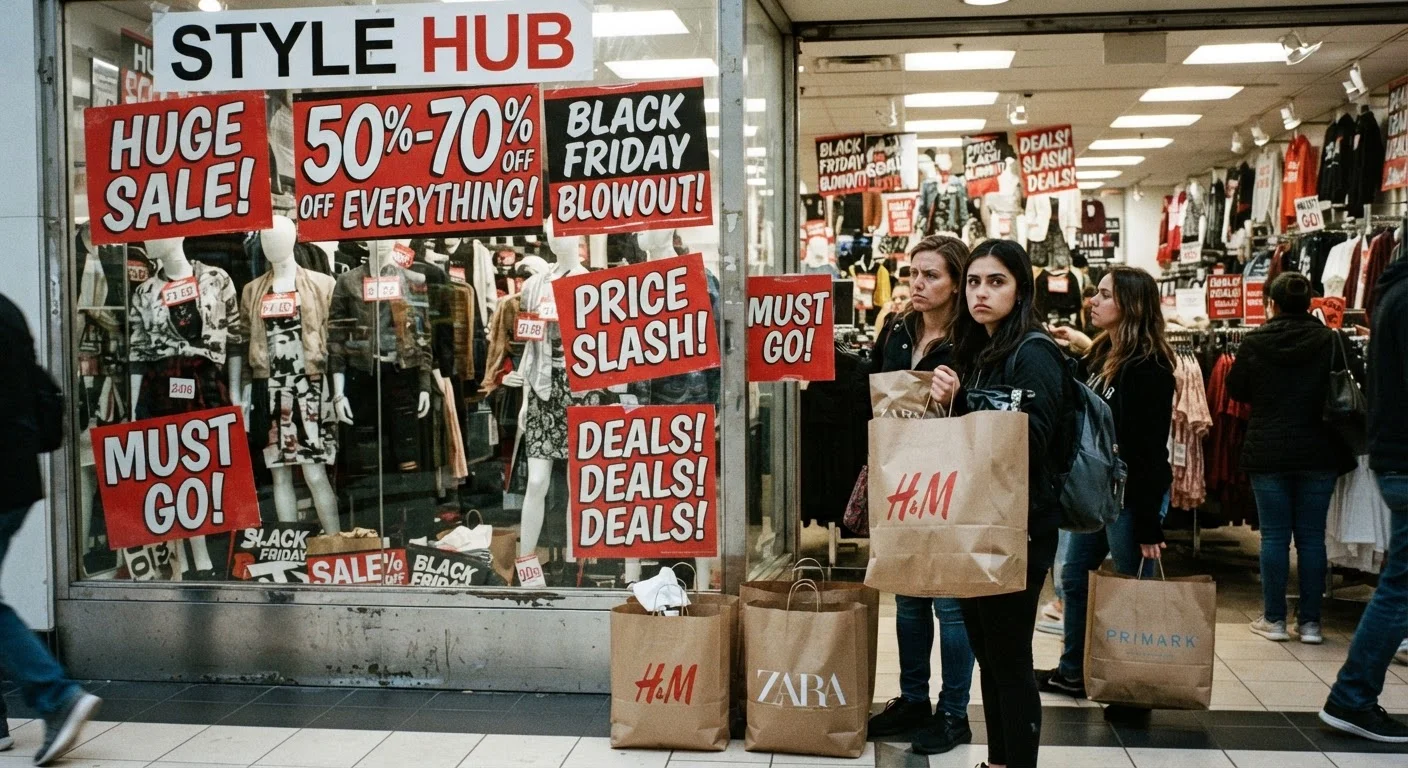
Photo credit: TurboBlogs.net | Explore Blogs At Turbo Speed
In this article
Not every discount is a deal. Learn how retailers set reference prices and what to look for before assuming a sale is saving you money.
Key Takeaways
- Retailers often set artificially high 'original' prices to make discounts appear larger than they are.
- A sale price is only meaningful if the item regularly sold at the reference price for a reasonable period.
- Urgency language like 'limited time' is a marketing tool, not a reliable indicator of real value.
- Comparing the unit price - not the sticker price - reveals the true cost of what you're buying.
- Your need for the item matters more than the size of the discount.
The Anatomy of a 'Sale'
Walk through any mall or scroll any retailer's homepage and you'll see the same dramatic tableau: bold red slashes through inflated prices, countdown timers ticking toward midnight, banners screaming "Up to 70% off!" But what does "on sale" actually mean in legal and practical terms?
In most U.S. states, a sale requires that an item was genuinely offered at its stated original price for a meaningful period before the discount was applied. The Federal Trade Commission (FTC) has long-standing guidance indicating that a former price used as a comparison must be a bona fide price at which the product was actually sold - not a price invented to make the markdown look impressive. The catch: enforcement is inconsistent, and the definition of "meaningful period" is fuzzy enough that retailers have considerable room to maneuver.
The result is a pricing landscape where a $200 sweater marked down to $80 might have only ever sold at $200 for a week before the "sale" began - or might never have sold at that price at all. Understanding this baseline is the first step to reading any price tag with clear eyes.
For a deeper look at the habits that protect your wallet beyond the price tag, see our guide on how return policies work - because a great deal on a product you can't return can quickly turn costly.
Common Sale Myths - Corrected
Shopping culture has built up a set of beliefs around sales that feel intuitive but often don't hold up under scrutiny. Here's where the most common assumptions go wrong.
Myth
If something is marked down significantly, I'm automatically saving money.
Fact
You only save money if the item was genuinely priced higher before and you actually needed it at any price.
Spending money you hadn't planned to spend - even at a discount - isn't saving; it's spending less than you might have. The relevant question isn't "how much is it off?" but "would I have bought this at any price this week?" Retailers know that a large percentage figure creates a sense of gain, which can override the simpler question of whether you need the item at all.
Myth
The original price shown next to the sale price is what the item used to cost.
Fact
Reference prices are set by the retailer and may reflect an aspirational price rather than a price at which the item routinely sold.
This practice - sometimes called reference pricing or anchor pricing - is widespread and legal in most contexts, provided some sales occurred at the listed price. The FTC's guidelines require a good-faith former price, but a single week of availability at the higher price can technically qualify. Price-tracking tools that show an item's history over 90 or more days give a far more honest picture of what it actually costs.
Myth
A limited-time sale means prices will go back up when it ends.
Fact
Many 'limited-time' sales are recurring promotions; the urgency framing is a marketing convention, not a guarantee of price movement.
Retailers frequently run the same percentage-off events on predictable schedules - end-of-month, holiday weekends, seasonal transitions - and the "sale ends Sunday" language is designed to compress your decision timeline. If you miss a sale on a non-perishable item, a comparable promotion is often weeks away. The timing guide shows how predictable these cycles really are for major categories.
Myth
Buying in bulk during a sale always multiplies your savings.
Fact
Bulk purchases during a sale only save money if you use all of what you buy before it expires, degrades, or your needs change.
Perishables, trend-sensitive clothing, and items with expiration dates can turn a bulk bargain into a loss through waste. The apparent per-unit savings evaporate if half the purchase goes unused. Our article on why bulk buying isn't always frugal unpacks exactly when volume purchases make sense and when they quietly cost more.
Myth
A higher original price signals better quality, so a discounted version is a great value.
Fact
Original price is not a reliable proxy for quality; some products are priced high specifically to support a larger-looking discount.
Pricing strategy and product quality are separate variables. An item can carry a high ticket price because of brand positioning, retail channel markups, or planned markdown cycles - none of which reflect the durability or performance of the product itself. Quality indicators worth examining include materials, warranty terms, and independent reviews rather than the original price on the tag.
What the Numbers Actually Tell You
Even when a discount is genuine, the sticker price comparison can obscure what you're really paying for. Two items can both be "on sale" at the same percentage off, yet deliver wildly different value depending on quantity, quality, and how much you'll actually use them.
~40%
Of U.S. apparel sold at a discount
Industry analyses have consistently found that roughly four in ten clothing items in the U.S. sell at a markdown rather than at the listed full price, suggesting 'sale' is often the default state.
3x
Price anchoring effect on perceived value
Behavioral economics research has shown that consumers rate the same item significantly higher in value when a high reference price is displayed alongside a lower sale price, even when they are unfamiliar with the product.
The most useful number in any buying decision is often the unit price - the cost per ounce, per use, or per year, depending on the product category. A clothing item marked down 40% is a great deal if it holds up for five years; it's a poor one if it pills after three washes. For a practical breakdown of how to read these numbers side by side, our piece on unit price vs. sticker price walks through the calculation clearly.
Timing also plays a role. Many product categories - mattresses, appliances, winter clothing - follow predictable markdown cycles tied to inventory turnover and seasonal demand. Knowing those patterns means you're less likely to buy impulsively at a "sale" price that will genuinely be lower in six weeks. Our guide on timing your purchases covers those cycles in detail.
And if you layer in cash-back tools or promo codes on top of a real discount, the savings compound - but only when the underlying price is legitimate to begin with. Our explainer on cash back, coupons, and promo codes explains exactly how each mechanism works so you can combine them strategically.
A Smarter Filter Before You Buy
The most reliable defense against manufactured urgency isn't cynicism - it's a short mental checklist applied before any purchase flagged as a "deal."
- Would you buy it at full price? If the answer is no, the discount is doing emotional work, not financial work.
- Can you verify the price history? Browser extensions and retailer comparison tools can surface how long an item has sat at its "original" price. A price that was "slashed" yesterday from a high that lasted two days tells a different story than one that held for six months.
- Is the discount on the item or the category? "Up to 70% off" means some items are 70% off; many more are likely 10-20% off. Read the fine print.
- What's the total cost of ownership? Accessories, maintenance, and replacement parts matter - especially for electronics and appliances. See how this thinking applies more broadly in our framework for value-first shopping.
Urgency Tactics Are Designed to Short-Circuit Reflection
Countdown timers, low-stock warnings, and 'only for members' framing are all engineered to move you toward a purchase decision before you've had time to evaluate it calmly. Pausing - even for 24 hours - is often enough to separate a purchase you'll be glad you made from one driven purely by the framing around a discount. If a deal can't survive a day's reflection, it may not be the deal it appears to be.
Sales are a legitimate retail mechanism, and genuine markdowns exist. The goal isn't to distrust every discount - it's to evaluate each one on its own merits rather than responding to the word "sale" as if it automatically signals opportunity.

Author
Lifestyle & Shopping Editorial Team
Lifestyle & Shopping Editorial Team is the collective byline for our editorial team and contributor network. Articles published under this byline or an editorial pen name are researched, written, and reviewed according to our editorial standards for clarity, consistency, and independence before publication.
View all articles →