
Why Buying in Bulk Isn't Always the Frugal Move People Assume
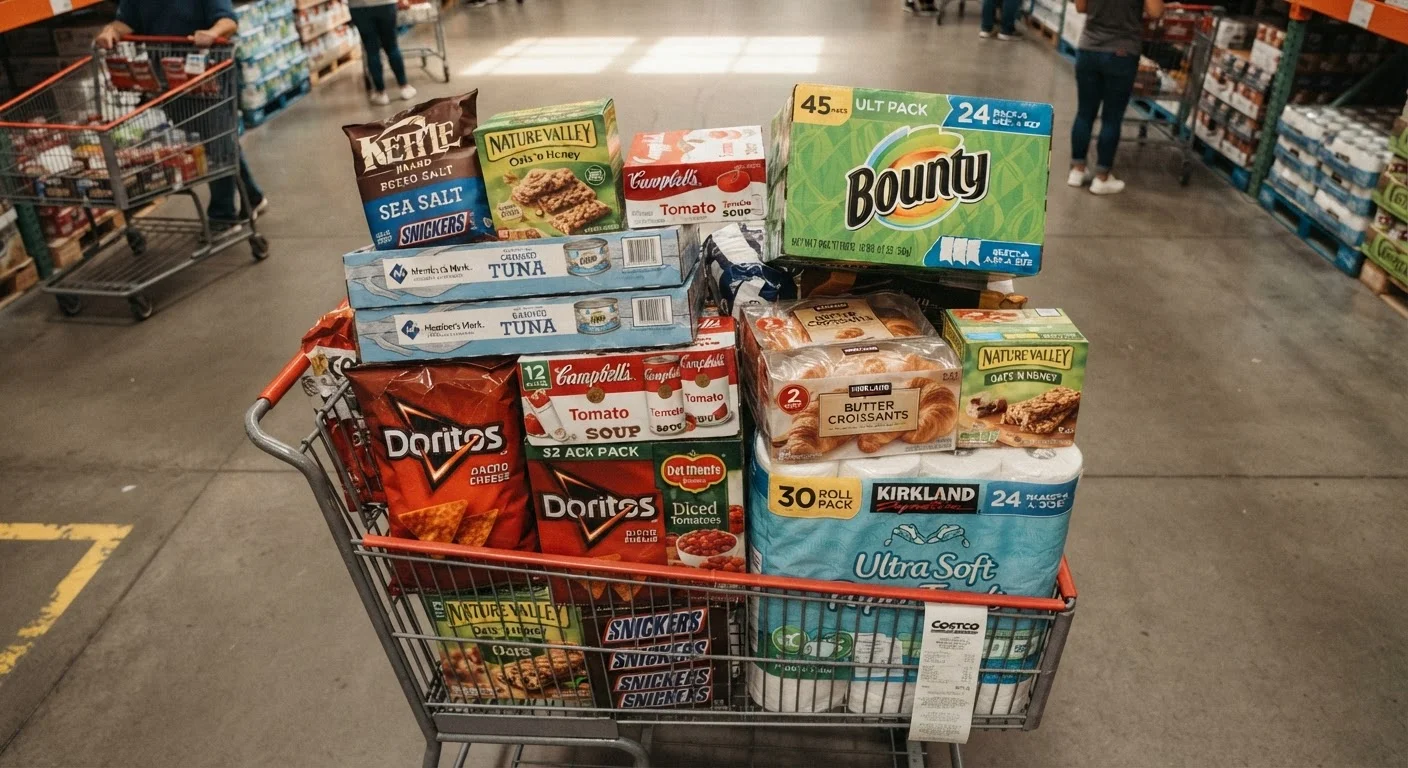
Photo credit: TurboBlogs.net | Explore Blogs At Turbo Speed
In this article
Bulk buying can save money—or quietly cost more through waste, storage, and spoilage. Learn the conditions where it actually makes sense.
Key Takeaways
- A lower unit price only saves money if you actually use the entire product before it expires or degrades.
- Storage costs, spoilage, and impulse overspending can erode or eliminate the financial benefit of buying in bulk.
- Bulk buying works best for shelf-stable, frequently used items in households that have adequate storage space.
- Comparing unit prices is useful, but it's only one part of calculating the true cost of a purchase.
The Bulk-Buying Promise vs. Reality
Walk into any warehouse club and the math seems obvious: a 48-pack of paper towels costs less per roll than the six-pack at your neighborhood grocery store. That logic - buy more, pay less per unit - is the entire premise of bulk purchasing, and it's not wrong. It's just incomplete.
The per-unit price is only the starting point of the equation. What happens after you load that cart matters just as much. Do you have space to store what you bought? Will you realistically consume it before it expires or loses quality? Did stocking up on one category cause you to overspend in a way that compressed your budget elsewhere?
These are the questions bulk buying tends to skip, and they're exactly why the strategy works beautifully for some shoppers and quietly backfires for others. Understanding when bulk makes sense - and when it doesn't - is a foundational piece of value-first shopping.
Myth
If the unit price is lower, buying in bulk always saves money.
Fact
A lower unit price only translates to savings if you use the entire product - spoilage, expiration, or changed preferences can make the effective cost higher than the regular-price alternative.
Unit price is a useful comparison tool, but it measures cost per ounce or per sheet - not cost per unit actually used. If half a bulk purchase expires or goes unused, your effective cost per used unit can far exceed what you would have paid buying smaller quantities. The savings are theoretical until the product is fully consumed.
Myth
Warehouse clubs are always cheaper than regular grocery stores.
Fact
Warehouse clubs offer lower prices on many items, but not universally - and membership fees, which typically run $50-$65 annually, must be factored into total spending to make a fair comparison.
Some categories - cleaning supplies, paper goods, certain pantry staples - tend to be genuinely cheaper at warehouse clubs. Others, including specialty items, fresh produce, and brand-name packaged snacks, are sometimes priced comparably or higher once you account for the membership cost spread across your purchases. Running the numbers on your specific shopping list gives a clearer picture than assuming the warehouse is always the better deal.
Myth
Buying in bulk reduces food waste because you always have what you need on hand.
Fact
Over-purchasing perishables in bulk is one of the primary drivers of household food waste, not a solution to it.
The reasoning behind this myth is intuitive but backwards. Having more of something doesn't make you more likely to use it efficiently - in fact, larger quantities can reduce perceived urgency, leading to items being forgotten, pushed to the back of shelves, and eventually discarded. Food waste researchers have consistently found that over-purchasing is a leading cause of food being thrown away in American households. Buying realistic quantities, even at a slightly higher unit price, often results in less waste overall.
Myth
Bulk buying always helps large families save more than small households.
Fact
Household size matters, but consumption rate and storage capacity are equally important factors - a large family that doesn't cook at home regularly may waste just as much as a single person.
Family size is a reasonable starting point for estimating whether bulk buying makes sense, but it's not the whole story. A household of five that eats out frequently or has unpredictable schedules may go through bulk perishables no faster than a couple who cooks at home every night. What actually drives whether bulk buying pays off is how consistently and predictably a product is consumed - not just how many people live in the house.
Myth
If something is on sale in bulk, the urgency to stock up is justified.
Fact
Promotional bulk pricing can be a genuine opportunity, but the same evaluation criteria apply - expiration, storage, and actual need still determine whether the purchase delivers real value.
Sale pricing adds emotional urgency that can override rational evaluation. A bulk sale on a product you use regularly with a long shelf life and room to store it? That's a legitimate opportunity. A bulk sale on a product you've never tried, that expires in four months, and that would require buying a storage bin to house? Probably not. The sale makes the unit price lower; it doesn't change the other variables that determine whether the purchase actually benefits you.
The Hidden Costs That Shrink Your Savings
Even when bulk pricing is genuinely lower, several secondary costs can erode or erase the advantage.
Spoilage and expiration. This is the most straightforward culprit. A gallon of olive oil bought in bulk is only a deal if you cook with it regularly enough to use it before it goes rancid - typically within 12 to 18 months of opening. The same logic applies to flours, spices, nuts, and many personal-care products that have real shelf-life limits. Food waste is one of the most common ways bulk shopping quietly damages household budgets. If you want to make your grocery spending count, pairing bulk staples with a budget-conscious approach to nutrition can reduce what ends up in the trash.
Storage overhead. Warehousing large quantities at home isn't free. Extra shelving, a second freezer, or a dedicated pantry area all carry real costs - both in money and in square footage. For renters or those in smaller homes, this trade-off is worth naming explicitly.
Opportunity cost and cash flow. Spending $200 in one warehouse trip ties up money that might otherwise cover more pressing needs. If that purchase goes on a credit card and carries a balance, the interest charges can eliminate the per-unit savings entirely.
Credit Card Interest Can Erase Bulk Savings
If a large warehouse purchase goes onto a credit card that carries a balance month to month, the interest charges can quickly outpace any per-unit savings. Before making a significant bulk purchase, it's worth considering whether the upfront cost fits your current cash flow - not just whether the unit price looks favorable.
None of this means bulk buying is a bad idea. It means the calculation is more nuanced than the unit-price tag suggests. Recognizing the spending patterns that quietly drain budgets is the first step toward making bulk purchasing actually work in your favor.
When Bulk Buying Genuinely Delivers
For the right household buying the right products, bulk purchasing is a genuinely effective tool. The conditions that make it work:
- Non-perishable or long shelf-life items - toilet paper, laundry detergent, canned goods, dried beans, and bottled water are examples where bulk almost always wins.
- High-frequency consumption - if your family goes through a product every two to three weeks, buying a three-month supply makes mathematical sense.
- Adequate storage without added cost - a dry, accessible pantry or garage shelf that you already have changes the equation significantly.
- A clear price benchmark - knowing your regular grocery store's unit price lets you verify that the bulk price is actually lower. As our coverage of how sale pricing actually works shows, a lower sticker number isn't always a genuine discount.
Equally important: going into a warehouse store with a focused list. These stores are intentionally designed to encourage browsing and spontaneous large purchases. A well-structured shopping list is one of the most effective defenses against spending more than you planned.
~30-40%
Share of food supply wasted at consumer level in the U.S.
The USDA estimates that between 30 and 40 percent of the U.S. food supply is wasted, with household over-purchasing among the contributing factors.
$50-$65
Typical annual warehouse club membership fee
Most major warehouse club memberships in the U.S. cost between $50 and $65 per year, a fixed expense that must be offset by actual savings to justify the cost.
Bulk buying is a tool, not a philosophy. Used deliberately, on the right products, with realistic estimates of your household's consumption, it can meaningfully reduce what you spend. Used reflexively - because the unit price looks lower - it can just as easily cost you more.

Author
Lifestyle & Shopping Editorial Team
Lifestyle & Shopping Editorial Team is the collective byline for our editorial team and contributor network. Articles published under this byline or an editorial pen name are researched, written, and reviewed according to our editorial standards for clarity, consistency, and independence before publication.
View all articles →