
Smart Home Ecosystems: How Matter, Zigbee, and Z-Wave Shape Your Choices
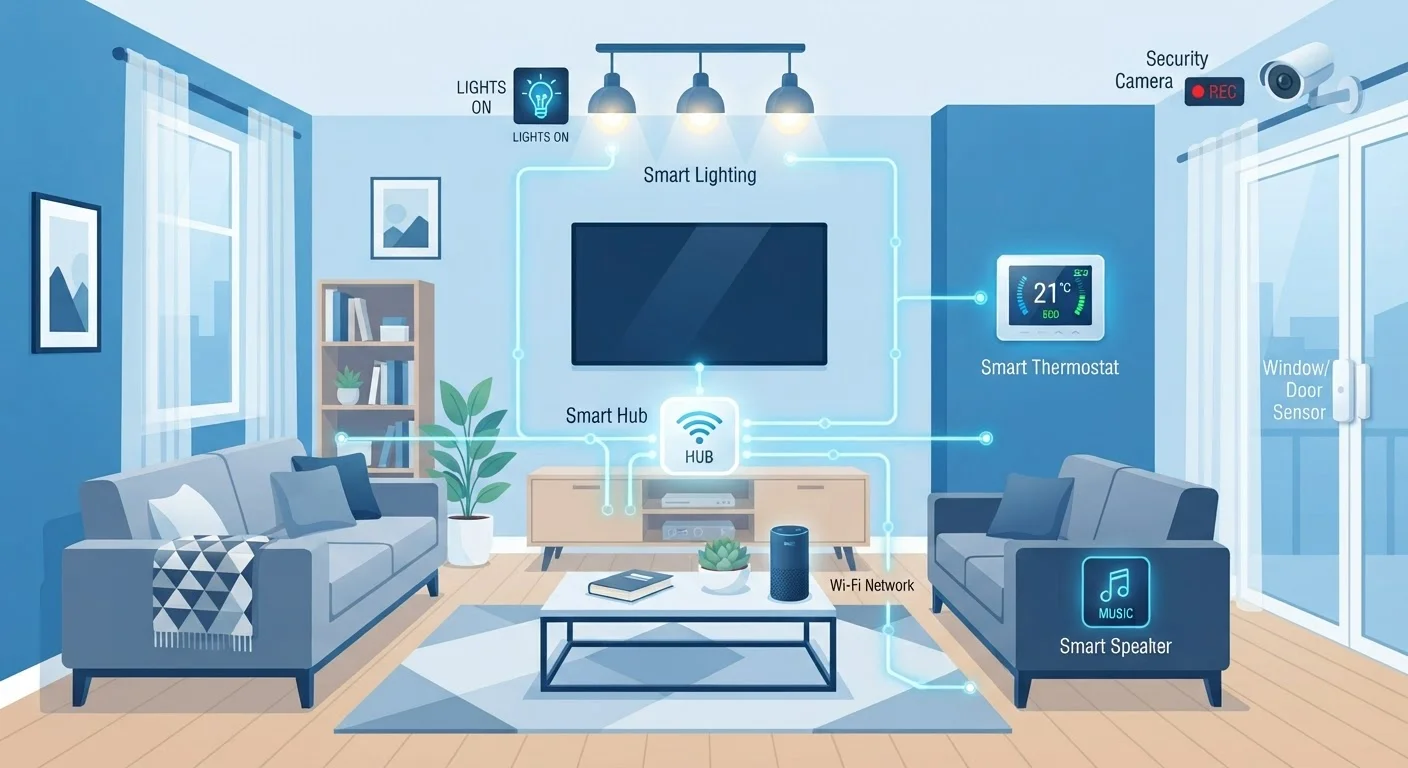
Photo credit: TurboBlogs.net | Explore Blogs At Turbo Speed
In this article
A clear breakdown of the wireless protocols and platform ecosystems that determine whether your smart devices can talk to each other.
Why Protocols Matter Before You Buy
Before you add a smart bulb, lock, or thermostat to your home, there's a question most product listings bury: which wireless protocol does this device use? The answer determines whether that device will work within your existing setup — or create a frustrating island of incompatibility. If you're just starting out, understanding what a smart home actually involves is a useful foundation before diving into protocols.
| Matter standard launch | Late 2022 (Connectivity Standards Alliance (CSA)) |
| Z-Wave max devices per network | 232 devices (Z-Wave Alliance specification) |
| Zigbee operating frequency | 2.4 GHz (Zigbee Alliance specification) |
| Z-Wave US operating frequency | ~908 MHz (Z-Wave Alliance specification) |
| Matter supporting platforms | Apple, Google, Amazon, Samsung (and others) (Connectivity Standards Alliance member list) |
| Thread protocol purpose | Low-power mesh networking for Matter devices (Thread Group specification) |
Smart home devices communicate over several distinct wireless standards. The most common are Wi-Fi, Bluetooth, Zigbee, Z-Wave, and the newer Matter standard. Wi-Fi and Bluetooth are familiar from everyday devices; Zigbee, Z-Wave, and Matter are purpose-built for smart home use and have meaningfully different trade-offs.
Zigbee and Z-Wave: The Mesh Network Veterans
Zigbee and Z-Wave are both mesh networking protocols, meaning each device on the network can relay signals to others — extending range and improving reliability without depending on a single central router. They operate on lower-power radio frequencies than Wi-Fi, which helps devices run longer on batteries.
Mesh network
A network where each device can relay data to other devices, extending range and improving reliability. If one node fails, signals can route around it via other devices.
Matter
An open smart home interoperability standard managed by the Connectivity Standards Alliance. It allows certified devices to work across multiple major platforms without proprietary bridges.
Thread
A low-power IPv6-based mesh networking protocol used by Matter devices. It requires a Thread border router to connect to your home's IP network.
Border router
A device that connects a Thread or other mesh network to a standard IP network (typically your home Wi-Fi). Many modern smart hubs and speakers include this function.
Hub
A central device that bridges smart home protocols (like Zigbee or Z-Wave) to your home network and to smartphone apps or voice assistants.
Protocol
A defined set of rules governing how devices communicate wirelessly. Different protocols use different radio frequencies, topologies, and power requirements.
Zigbee runs on the 2.4 GHz band (shared with Wi-Fi and Bluetooth), supports hundreds of devices per network, and has a large ecosystem of manufacturers. Because the standard has historically been implemented with some variation between vendors, not all Zigbee devices work together seamlessly without a compatible hub. Common Zigbee hubs include dedicated smart home controllers that bridge Zigbee devices to your Wi-Fi network and app.
Z-Wave operates on a sub-GHz frequency (around 908 MHz in the US), which reduces interference from Wi-Fi and other 2.4 GHz devices. Z-Wave certification requirements have traditionally been stricter, meaning Z-Wave devices tend to interoperate more consistently. The trade-off is a smaller device catalog compared to Zigbee. Z-Wave networks support up to 232 devices — more than sufficient for most homes.
Both protocols require a hub to connect to your smartphone and cloud services. Understanding what a hub actually does helps clarify where these protocols fit into a broader smart home setup.
Matter: The Cross-Platform Standard Built for Interoperability
Matter is an open-source smart home standard developed by the Connectivity Standards Alliance (CSA), with major backing from Apple, Google, Amazon, and Samsung. Launched in late 2022, Matter is designed to address the longstanding fragmentation problem: a Matter-certified device should work with any Matter-compatible platform — Apple Home, Google Home, Amazon Alexa, and others — without proprietary bridges or workarounds.
Matter Doesn't Erase Existing Ecosystems
Matter is designed for forward compatibility, not to replace Zigbee or Z-Wave devices already in use. Many hub manufacturers are adding Matter support through firmware updates, allowing existing Zigbee and Z-Wave devices to be exposed to Matter-compatible platforms. If you already own a Zigbee or Z-Wave setup, check whether your hub vendor offers or plans to offer a Matter bridge update before assuming you need to replace hardware.
Matter typically runs over Wi-Fi or Thread, a low-power mesh protocol specifically designed to support Matter devices. Thread-capable devices require a Thread border router — a device that bridges the Thread mesh to your home network. Some smart speakers and hubs already include Thread border routers built in.
Matter does not replace Zigbee or Z-Wave. Millions of Zigbee and Z-Wave devices are already installed in homes, and those ecosystems continue to grow. What Matter changes is the experience at the platform level: users buying new Matter-certified devices face fewer "will this work with my setup?" questions. For a full look at planning around these considerations, the complete smart home planning guide covers ecosystem decisions end to end.
Choosing a Protocol: Key Factors to Weigh
No single protocol is universally superior. The right choice depends on your priorities:
- Device range and obstacles: Mesh protocols (Zigbee, Z-Wave, Thread) handle signal obstacles better than point-to-point Wi-Fi or Bluetooth. Larger homes benefit from mesh coverage.
- Battery life: Zigbee, Z-Wave, and Thread are designed for low power draw — important for sensors, door locks, and leak detectors that run on batteries for months or years.
- Existing platform: If you already use Apple HomeKit, Google Home, or Amazon Alexa, Matter-certified devices will integrate most cleanly going forward. Zigbee and Z-Wave remain strong for established ecosystems with existing hubs.
- Device catalog: Zigbee has the broadest selection of available devices. Z-Wave offers strong reliability. Matter's catalog is growing rapidly but is still expanding.
- Hub requirement: Zigbee and Z-Wave devices need a compatible hub to function. Some Matter devices connect directly over Wi-Fi; others need a Thread border router.
If you're weighing whether to use wired connections instead, the trade-offs between wired and wireless smart home devices are worth reviewing before committing to a wireless-only setup.
600+
Matter-certified products
The CSA reported over 600 Matter-certified products within a year of the standard's launch, with the catalog continuing to expand.
~10x
Lower power vs. Wi-Fi
Zigbee and Z-Wave devices typically consume significantly less power than equivalent Wi-Fi devices, enabling multi-year battery operation for sensors and locks.
4,000+
Zigbee-certified products
The Zigbee Alliance has certified thousands of products across lighting, sensors, thermostats, and more, making it one of the largest smart home device ecosystems.

Author
Tech & Electronics Editorial Team
Tech & Electronics Editorial Team is the collective byline for our editorial team and contributor network. Articles published under this byline or an editorial pen name are researched, written, and reviewed according to our editorial standards for clarity, consistency, and independence before publication.
View all articles →